
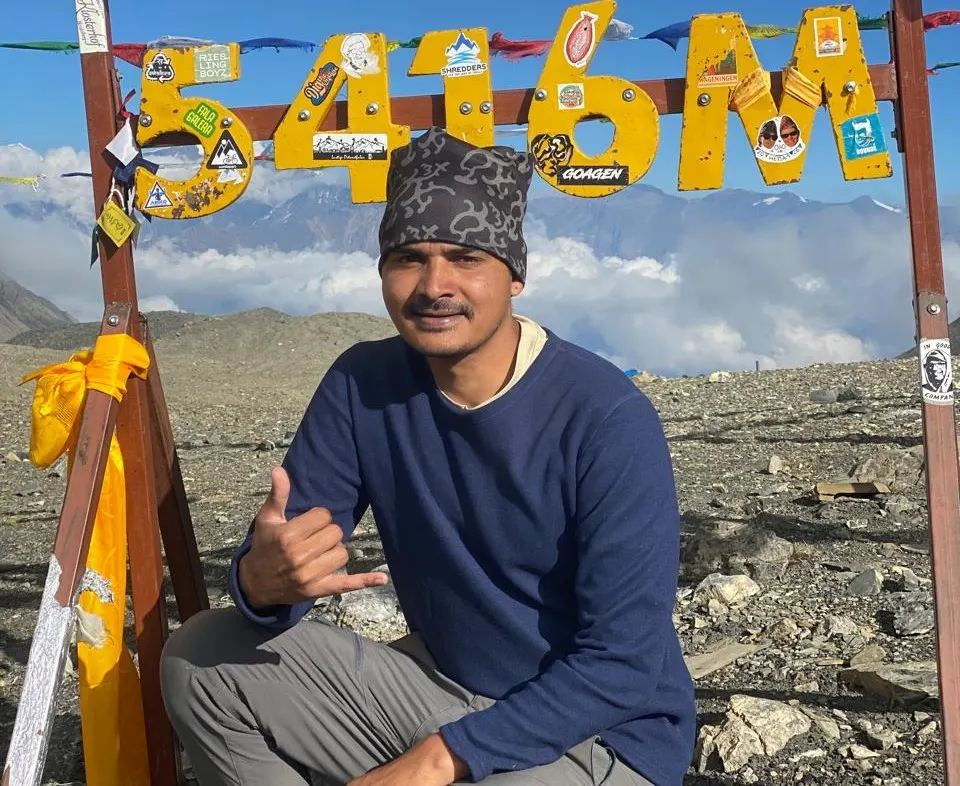
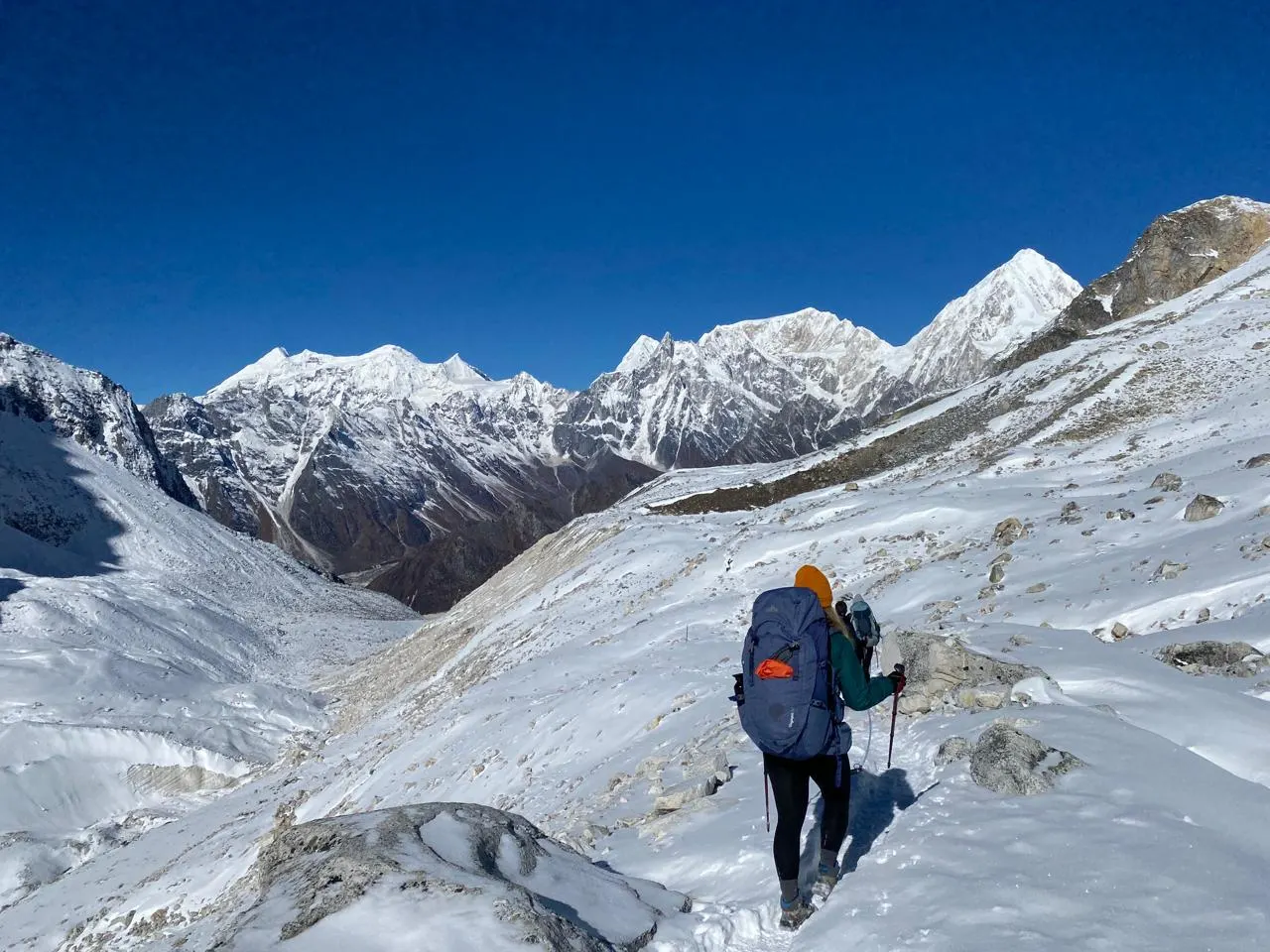
I’ve lost count of how many emails I get from trekkers asking the same question: “Can I just do the Manaslu Circuit on my own?” The short answer is no — and once you understand why, you’ll probably stop wanting to anyway.
Manaslu sits in a restricted area of Nepal, protected under the Manaslu Conservation Area since the region first opened its doors to foreign trekkers back in 1991. That late opening is exactly why it still feels the way it does — raw, quiet, and largely untouched by the tea-house sprawl you’ll find on busier trails. Unlike the Everest Base Camp Trek or Annapurna Base Camp Trek, where you can technically walk in solo, the stretch of trail between Jagat and Bimthang falls inside a government-controlled restricted zone. Nepal’s rules are clear: no guide, no permit, no entry.
Why Manaslu Deserves a Spot on Your List
A decade ago, only serious trail veterans talked about Manaslu. That’s changed. Word has spread about the scenery, the culture, and the fact that you can stand beneath Mt. Manaslu — the world’s eighth-highest peak at 8,163m — without fighting crowds for the view. What keeps pulling trekkers back:
- Some of the most unfiltered mountain scenery in Nepal
- A trail that still feels remote and wild, not touristed
- Villages where Hindu and Buddhist traditions blend rather than compete
- A trek that’s demanding but manageable for reasonably fit hikers
- Prices that stay friendlier than you’d expect for a restricted-area trek
Increasingly, people are choosing Manaslu as their alternative to the Annapurna Circuit — same sense of crossing a big Himalayan pass, but with far fewer people on the trail and villages that haven’t yet reshaped themselves around tourism.
Can You Trek Manaslu Solo? No — Here’s the Actual Reason Why
I’ll be straight with you: going it alone here isn’t just discouraged, it’s against the law. The Nepali government banned independent trekking in the Manaslu region outright, and it’s not bureaucracy for its own sake — it comes down to safety and preservation.
The trail runs close to the Tibet border, threading past Tsum Valley, Larkya La Pass, and the Manaslu Base Camp area — all inside restricted territory. Entering any of it requires special permits, and those permits are only issued through a licensed guide working with an authorized agency. There’s no workaround.
There’s a cultural reason behind the rule too. Much of the upper Manaslu region carries a strong Tibetan influence, with villages that have stayed largely outside the reach of modern development. The permit-and-guide system exists partly to keep it that way — protecting both the landscape and the way of life that makes this trek worth doing in the first place.
A few rules to know before you plan around them:
- You need a minimum group size of two trekkers (guides and porters don’t count toward this)
- Every permit has to be processed through a registered Nepali trekking agency — you can’t apply on your own
- Your guide has to be government-licensed, arranged through that agency
What a Guide Actually Does for You on This Trail
The legal requirement aside, here’s what I tell people who ask if a guide is “worth it”: on Manaslu, it’s less about compliance and more about not missing the trip you came for.
They know ground you’d never find on a map. This is remote country — narrow paths, grassy stretches with no signage, trail junctions that all look the same after a long day. Guides who’ve walked this route for years read the terrain the way you’d read a street sign at home.
They build an itinerary that actually protects you. A good Manaslu itinerary isn’t just a list of villages — it’s built around altitude, weather patterns, and rest days placed where your body will actually need them. That planning is often the difference between a trip that goes smoothly and one that doesn’t.
They close the language gap. English fluency thins out fast once you’re past the first few villages. Your guide becomes your translator, your cultural interpreter, and honestly, your icebreaker with the locals — though learning a simple “Namaste” yourself will still earn you a lot of goodwill.
They open up the culture, not just the scenery. Lower Manaslu leans Hindu; the upper villages are shaped by Tibetan Buddhism. Every monastery, mani wall, and farming custom has a story behind it, and that story usually only comes out if you’ve got someone local walking beside you.
They watch out for altitude sickness and terrain risk before it becomes a problem. Steep, uneven trail plus high elevation is a combination that catches people off guard. Guides pace you, watch for early symptoms, and know when to hold a rest day.
They handle the logistics you don’t want to. Permits, teahouse bookings, transport, packing advice — a guide (through their agency) takes this off your plate entirely.
They put money directly into local communities. Hiring a local guide often gets you better teahouse rates too, not worse — while keeping income inside the villages you’re passing through instead of exporting it. That’s part of why fewer young Nepalis end up leaving for work abroad.
What Does the Manaslu Circuit Trek Actually Cost?
There’s no fixed price tag — it moves with your agency, itinerary length, season, and the level of service you choose. As a rough guide, expect somewhere between $2,100 and $3,000 for a full trip. That’s genuinely comparable to Everest region trekking costs, despite Manaslu’s reputation as a pricier, harder-to-reach destination.
One piece of advice from someone who’s seen it both ways: don’t chase the cheapest quote you find. Rock-bottom prices usually mean corners get cut somewhere — guide experience, safety margins, or the amount that actually reaches local communities.
Guide costs: Budget around $30 USD per day for a licensed, insured guide. Note that a freelance guide, however experienced, cannot secure your restricted-area permits — that has to run through an authorized agency.
Porter costs: Expect roughly $25–30 USD per day, insurance included. Carrying your own pack is doable, but a porter buys you energy and freedom to actually enjoy the trail instead of just surviving it.
Permits You’ll Need (Your Agency Handles the Paperwork)
Manaslu’s restricted status means three separate permits are required before you set foot on the trail. Your trekking agency will process all of this — you’re really just responsible for handing over documents on time. Here’s what’s involved, so you know what you’re paying for:
1. Manaslu Restricted Area Permit
Pricing shifts by season and trip length, covering the Jagat-to-Sama Gaun stretch:
| Season | Cost |
| September–November | $70 for the first week, then $10/day after |
| December–August | $50 for the first week, then $7/day after |
Good to know: once you hold this permit, you don’t need a separate TIMS card — unless you’re continuing on toward the Annapurna Circuit from Dharapani, in which case TIMS kicks back in.
2. Manaslu Conservation Area Permit (MCAP)
Required from Philim onward, flat-rate year-round. You’ll need a printed photo to apply, and it’s issued through the Nepal Tourism Board in Bhrikutimandap, Kathmandu.
| Traveler type | Cost |
| Foreign nationals | $27 (NPR 3,000) |
| SAARC nationals | NPR 1,000 |
| Nepali nationals | NPR 100 |
3. Annapurna Conservation Area Permit (ACAP)
Needed if your route continues from Dharapani to Besisahar. Same flat pricing as MCAP, same photo requirement, obtainable in Kathmandu or Pokhara.
| Traveler type | Cost |
| Foreign nationals | $27 (NPR 3,000) |
| SAARC nationals | NPR 1,000 |
| Nepali nationals | NPR 100 |
Adding Tsum Valley? You’ll need one more permit — $35 USD per person for the first 7 days.
Traveling Solo but Want Company? We Can Slot You Into a Group
A lot of trekkers reach out worried about doing this trip alone, not realizing “solo” and “without company” don’t have to mean the same thing. At Visit View Nepal Trek, we run scheduled group departures throughout the season, and if your dates line up with an existing group, we’ll fold you right in.
Just fix your time and date or reach out to our team directly with your preferred window and route, and we’ll match you with trekkers heading out around the same time. You still get the guide the law requires — plus company on the trail if that’s what you’re after.
When Should You Go? A Season-by-Season Breakdown
The Manaslu Circuit starts low, along the Budi Gandaki River, and climbs all the way up toward the edge of the Tibetan Plateau. You’re moving from around 600m to a high point of 5,160m over the course of the trek, which means you’ll pass through several distinct climate zones along the way. Here’s how each season actually plays out on the ground.
Autumn (September–November) — the sweet spot. This is the season I point most first-timers toward. Stable weather, clear skies, and mountain views with nothing hiding them. The lowland villages are green with rice paddies, and the trail itself is dry and easy to move on. If you want the classic Manaslu experience with the least amount of weather risk, this is it.
Spring (March–May) — a close second. Rhododendron forests come alive with color this time of year, and the lower trail turns genuinely beautiful. Skies stay mostly clear, and you get strong mountain visibility over the green hillsides. Spring and autumn trade off as the two best windows to go.
Winter (December–February) — for the cold-weather crowd. Fewer trekkers, quieter teahouses, and on clear days, some of the sharpest mountain views you’ll get all year. That said, this is genuinely tough going — expect serious cold, heavy snow, and a real chance that Larkya La or certain teahouses close entirely if conditions turn bad.
Summer/Monsoon (June–August) — I’d steer you away from this one. It’s technically possible, but I won’t pretend it’s a good idea. Leeches and snakes turn up on the lower trail, landslides and flooding can cut off sections of the route, and the accident risk climbs noticeably. Unless your schedule genuinely gives you no other option, pick a different season.
How Hard Is the Manaslu Circuit, Really?
Manaslu earns its reputation as one of Nepal’s better off-the-beaten-path treks partly because it doesn’t go easy on you. The trail climbs and drops constantly, and while it’s not a technical climb, the terrain is rough enough to challenge even seasoned trekkers — especially in the first few days, when steep, narrow paths test your legs before you’ve found your rhythm.
Distance and pace. You’re covering roughly 177km over about two weeks, averaging 10–20km and 6–7 hours of walking a day. That adds up. If you show up having done zero prep, you’ll feel it. A few weeks of hiking and cardio work beforehand makes a real difference.
Where you’ll sleep and eat. During peak autumn and spring months, teahouses fill up fast, and you may be waiting in line for a shared bathroom more often than you’d like. Menus stay fairly basic too — this is still a developing region, so don’t expect much variety.
Altitude sickness is the real risk factor. Once you’re above 3,000m, and this trek tops out at 5,160m, Acute Mountain Sickness becomes a genuine concern — headaches, breathlessness, nausea, appetite loss. Every guide we send out is trained to recognize and respond to these symptoms, so speak up the moment something feels off. On your end: drink more water than feels necessary, eat properly, and don’t rush your pace.
Weather adds its own layer of difficulty. Because you’re crossing multiple climate zones, conditions can shift fast, particularly in winter and monsoon. It’s not something you can fully plan around, but going in prepared — and with a guide who reads the signs — takes most of the danger out of it.
None of this is meant to scare you off. With the right guide, sensible pre-trip conditioning, and realistic expectations, Manaslu is very achievable — it just isn’t a trek to walk into casually.
A Sample Manaslu Itinerary, Built by Guides Who’ve Walked It
Every agency structures this trek a bit differently, and it can be trimmed or stretched depending on your schedule. Our recommendation, based on years of running this route, is a 16–18 day itinerary — long enough to build in real acclimatization days without dragging the trip out unnecessarily. Here’s the itinerary our own guides helped shape:
| Day | Route | Max Altitude | Walking Time |
| 1 | Arrival in Kathmandu | 1,350m / 4,429ft | — |
| 2 | Kathmandu: sightseeing & trek prep | 1,350m / 4,429ft | — |
| 3 | Drive to Sotikhola | 710m / 2,330ft | — |
| 4 | Sotikhola → Maccha Khola | 900m / 2,953ft | 6–7 hrs |
| 5 | Maccha Khola → Jagat | 1,410m / 4,626ft | 6–7 hrs |
| 6 | Jagat → Deng | 1,804m / 5,919ft | 6–7 hrs |
| 7 | Deng → Namrung | 2,630m / 8,629ft | 6–7 hrs |
| 8 | Namrung → Samagaon | 3,530m / 11,582ft | 6–7 hrs |
| 9 | Samagaon → Pungyen Gompa → Samagaon | 3,530m / 11,582ft | 6–7 hrs |
| 10 | Samagaon → Samdo | 3,860m / 12,665ft | 4–5 hrs |
| 11 | Rest day in Samdo | 3,860m / 12,665ft | — |
| 12 | Samdo → Dharamsala/Larkya B.C. | 4,460m / 14,633ft | 4–5 hrs |
| 13 | Dharamsala → Larkya La → Bimthang | 5,160m / 16,930ft | 8–9 hrs |
| 14 | Bimthang → Tilije | 2,300m / 7,546ft | 5–6 hrs |
| 15 | Tilije → Tal | 1,700m / 5,578ft | 5–6 hrs |
| 16 | Tal → Syange | 1,080m / 3,543ft | 6–7 hrs |
| 17 | Syange → Kathmandu | 1,350m / 4,429ft | 8–9 hrs |
| 18 | Final departure | — | — |
This itinerary already builds in the acclimatization days most self-planned trips leave out — and it can flex around your interests. We customize routes regularly, so treat this as a strong starting template, not a fixed script.
Want to go further? Manaslu pairs naturally with a couple of extensions:
- Tsum Valley add-on — branches off near Ekle Bhatti and pushes into even more remote territory, including the standout viewpoint at Mu Gompa. Combined with the full Manaslu Circuit, this runs around 27 days.
- Manaslu + Annapurna with Tilicho Lake — instead of turning back toward Besisahar, you continue on from Dharapani into Annapurna territory, through dense forest and past glacial lake country. This combined trip typically runs about 25 days.
Packing: Don’t Let Bad Gear Ruin a Good Trek
Your gear either sets you up to enjoy this trek or quietly wears you down for two weeks straight. A jacket that isn’t warm enough, or boots that weren’t broken in before you left — either one can turn a good trip miserable fast. And since this is trekking, not mountaineering, you can skip the technical climbing gear (carabiners, ice axes, and the like) — focus instead on solid warm layers, sun protection, and footwear you already trust.
One practical upside: on our trips, a porter carries the bulk of your load, so you can pack for comfort and safety without turning your own back into the limiting factor.
The Full Manaslu Packing List
This is the same list I hand new clients before any high-altitude trek in Nepal, Manaslu included. It’s built from what actually gets used on the trail — not a generic “just in case” list.
Body wear
- 8–10 sets of base layer/underwear
- 1 thermal inner layer
- 1–2 fleece mid-layers
- 1 wind/waterproof shell jacket
- 1 down jacket
- 2 pairs fleece pants
- 2 trekking trousers + 1 pair shorts
- 5–6 hiking shirts
Head wear
- Sun hat
- Beanie
- 2 buffs
- Sunglasses (UV-rated — this matters more at altitude than people expect)
Hand wear
- Inner liner gloves
- Outer windproof gloves
Footwear
- Broken-in hiking boots (please don’t bring brand-new ones)
- Sandals or lightweight shoes for camp/teahouse evenings
- Trekking socks
- Toe/finger warmers
- Gaiters
Bags
- Duffel bag (for your porter to carry)
- Rucksack
- Daypack
- Rain cover
Sleep
- Sleeping bag rated for sub-zero temps
- Earplugs (teahouse walls are thin)
Toiletries
- Sunscreen
- Face and body moisturizer
- Lip balm
- Toilet paper (2 rolls)
- Toothbrush and toothpaste
- Hand sanitizer
- Baby wipes
- Shampoo
- Shower gel
- Quick-dry towel
- Plastic bags for damp/dirty gear
Medication and first aid
- Any personal prescriptions
- Antibiotics (respiratory and stomach infections)
- Diamox (altitude sickness prevention)
- Foot powder
- Anti-inflammatory tablets
- Cotton roll
- Gauze dressing (5–6 pieces)
- Band-aids (10–15)
- Paracetamol
- Cold/flu syrup
- Antiemetic (for nausea/vomiting)
- General painkiller
- Loperamide (diarrhea)
- Omeprazole (gastric relief)
- Insect repellent
- Water purification tablets
- Blister repair kit
Accessories
- Hydration bladder
- Trekking poles
- Waist belt/pack support
- Trail map
- Pee funnel (genuinely useful, especially for women)
- Rain poncho
- Headlamp
- Trail snacks
Electronics
- Phone and charger
- Camera with spare batteries
- Power bank
- Journal and pen
- A book or two
- Something small to pass downtime — cards, a travel game
Documents
- Passport
- Visa (issued on arrival at Tribhuvan International Airport)
- Travel insurance covering high-altitude trekking
- Cash (ATMs disappear once you’re up in the hills)
- Flight tickets
- Credit card
One Last Thing Before You Book
If you’ve made it this far, you’re clearly serious about Manaslu — and I’d encourage you to keep it on the list. It’s one of the few places left in Nepal where the trail still feels genuinely remote, and where the culture hasn’t been reshaped around tourism yet.
Since a guide isn’t optional here, the one decision that matters most is which guide. Don’t just book and show up — talk to your agency first, ask questions, get a feel for your guide’s communication style and personality before you commit. You’ll be spending two weeks with this person; it’s worth getting right.
Planning a Trip to Manaslu? We’re Happy to Help
We’ve been running treks in this region for years, and our Manaslu guides are trained in first aid, altitude sickness management, and — just as importantly — know how to keep spirits up on a long, tiring day. Tell us your dates and what you’re looking for, and we’ll build the trip around you.
Questions before you commit? Get in touch or message us on WhatsApp at +977-9845548583.
Frequently Asked Questions
How hard is the Manaslu Circuit Trek?
It’s genuinely demanding — long walking days, altitude that climbs past 5,000m, rocky and dusty trail sections, and weather that can shift with little warning. Even trekkers with experience elsewhere find it tougher than expected. That said, it’s very achievable with the right prep: build up your cardio and leg strength beforehand, trek with an experienced guide, and don’t rush your acclimatization days.
How many days does the Manaslu Trek take?
It depends on your pace and interests. A compressed version can be done in 10–12 days, but most trekkers get more out of a 17–20 day itinerary that leaves room to actually enjoy it instead of rushing. Add Tsum Valley or an Annapurna extension, and you’re looking at 20–30 days total.
When’s the best time to trek Manaslu?
Autumn (September–November) and spring (March–May) are the two windows most guides — including us — point people toward. Stable weather, clear mountain views, and low risk of the trail getting disrupted by snow or rain. Winter works if you don’t mind serious cold, and monsoon is one we generally advise against.
Can I do the Manaslu Trek solo, just with a guide?
No — and this trips people up. Nepal’s regulations require a minimum group of two trekkers, not counting your guide or porter, on top of the guide requirement itself. So a lone trekker technically can’t get permits even with a guide booked. If you’re traveling solo and don’t have a trekking partner, we can pair you with another client heading out around the same time — just tell us what you’re looking for in a trail companion.
Do I need travel insurance for Manaslu?
Yes, and it should specifically cover high-altitude trekking and emergency evacuation. Given the maximum elevation on this route (5,160m at Larkya La), standard travel insurance often won’t cut it — check the altitude coverage limit before you buy.
Is there mobile signal or Wi-Fi on the trail?
Patchy at best. Lower villages usually have some connectivity, and many teahouses sell local SIM data or offer paid Wi-Fi, but don’t count on a strong or constant connection once you’re past Samagaon. Worth telling people back home to expect quiet stretches.
Can beginners do the Manaslu Circuit Trek?
It’s possible, but I wouldn’t call it a beginner-friendly trek — it’s tougher than more popular routes like Everest Base Camp or Annapurna Base Camp. If you’re relatively new to trekking, come in with solid cardio fitness, do a shakedown hike or two beforehand, and lean heavily on your guide’s pacing advice.