Highlights
- A scenic drive out of Kathmandu to Soti Khola, tracing rivers and terraced hillsides the whole way
- Time at Mu Gompa and Lungdang Gompa, two of the spiritual anchors of Tsum Valley
- A stop at Milarepa’s Piren Phu Cave — locally known as the Pigeon Cave — the most sacred cave site in the valley
- Rachen and Dephyudonma monasteries, among the oldest in the region
- A full circuit around Manaslu itself, the world’s eighth-tallest mountain
- An optional side trip from Samagaun to Birendra Lake, Punhyen Glacier, or Manaslu Base Camp
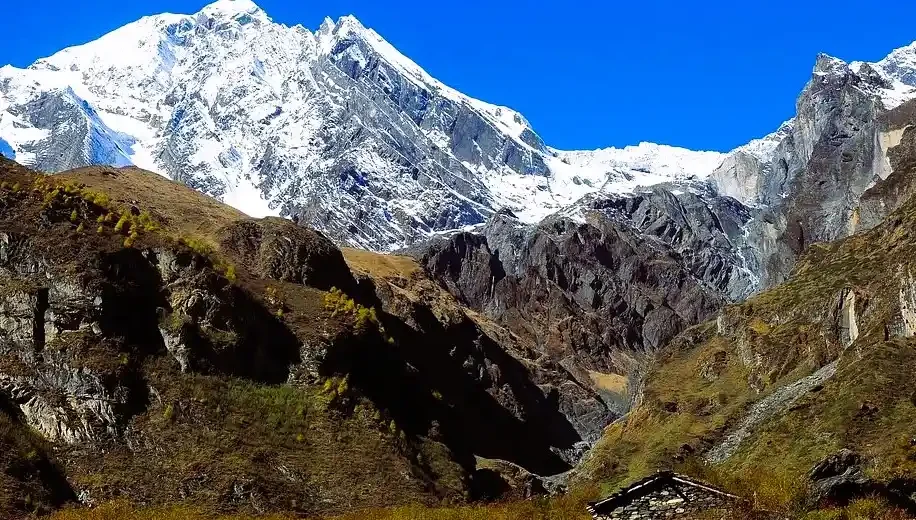
- Sweeping views of Manaslu, Himchuli, and the Ganesh Himal range near the Nepal–Tibet border
- Crossing Larkya La Pass (5,106m), one of the longest high passes anywhere in the Himalayas
- A rare cultural mix of Tibetan Nupri and Gurung communities in one trek
- Centuries-old stupas and monasteries still very much in daily use
- Trails with a fraction of the foot traffic you’d find on Everest or Annapurna routes
- A route that once served as an actual trading corridor into Tibet
Overview
If you ask me which trek in Nepal still feels like a genuine discovery, I’ll point you straight to this one. The Tsum Valley and Manaslu Circuit combo loops all the way around Mount Manaslu (8,163m), the eighth-highest peak on earth, and takes you over the wild, windswept Larkya La Pass at 5,106m. Along the way you’ll pass through villages that most trekkers in Nepal never even hear about, let alone visit.
Both Tsum Valley and the Manaslu region are restricted areas, which means permits, paperwork — and, in exchange, trails that stay refreshingly free of crowds. I’ve sent trekkers through here for years, and what keeps bringing people back isn’t just the mountain views (though they’re extraordinary). It’s the sense that you’re walking through a living piece of Tibetan Buddhist culture — monasteries older than most nations, villages where yak herding and barley farming still shape daily life, and a warmth from the local Tsumba and Nupri communities that you simply won’t find on the busier trails.
What to Expect on This Trek
This 19-day route stitches together two of Nepal’s most tightly protected and least-visited regions into one continuous journey. It’s not a “peak-bagging” trek — it’s a slow unfolding of Buddhist heritage layered over some of the most dramatic scenery in the Himalayas, and locals still call Tsum the “Valley of Happiness” for good reason.
Tsum Valley itself curves like a horseshoe beneath Ganesh Himal and Sringi Himal, with the Shar Khola and Buri Gandaki rivers meeting to carve out the landscape. Mu Gompa (3,700m) and Rachen Gompa have stood watch over this valley for generations, and walking up to them against that mountain backdrop is one of those moments that tends to stick with people long after the trek ends.
The route begins with a drive from Kathmandu to Soti Khola, then follows the Budhi Gandaki River through lowland forest, narrow gorges, and a fair number of suspension bridges before climbing into remote Buddhist settlements. Villages like Jagat, Lokpa, Chumling, Chhokangparo, and Nile each bring something different — prayer flags strung across stone alleys, chortens marking the trail, a pace of life that hasn’t changed much in decades. The detour to Milarepa’s Piren Phu Cave, a meditation site steeped in local legend, adds a genuinely spiritual layer to the trip.
From Tsum, the trail pushes on toward Deng, Namrung, and Samagaun, where Manaslu finally dominates the skyline in full. A built-in rest day at Samagaun gives you time to explore Pungyen Gompa or hike to Manaslu Base Camp before pressing on to Dharamsala, the launch point for the pass crossing.
Larkya La Pass (5,160m) is the trek’s high point, quite literally — the views from up there take in Himlung Himal, Manaslu, Annapurna II, and ridgeline after ridgeline of untouched snow. Dropping down into Bhimtang brings you into the Annapurna Conservation Area, with greener forests, open meadows, and a different cultural rhythm altogether. The final stretch from Gho to Tal wraps up the trek before a scenic drive back to Kathmandu.
A Quick Heads-Up Before You Book
Plan to land in Kathmandu at least one full weekday before the trek starts. Getting the special Manaslu permit takes a full working day, and we need your original passport with a valid Nepali visa to process it. We’ll also use this time for a proper gear check and trip briefing, so you’re not sorting out equipment problems on day one of the trail.
This itinerary uses public bus transport as standard, though if you’d rather have more legroom and flexibility, a private jeep can be arranged for an extra cost.
Online Trip Briefing
Once your booking is confirmed, we’ll email you available times for an online briefing. This is where we walk through the full equipment checklist, the day-by-day itinerary, and what the trail conditions are actually like — not the brochure version. We’ll schedule this once we’ve received your documents.
| Manaslu Tsum Valley Trek – 13 Days Trekking in Nepal From To US$ 815 Save US$ 310 | 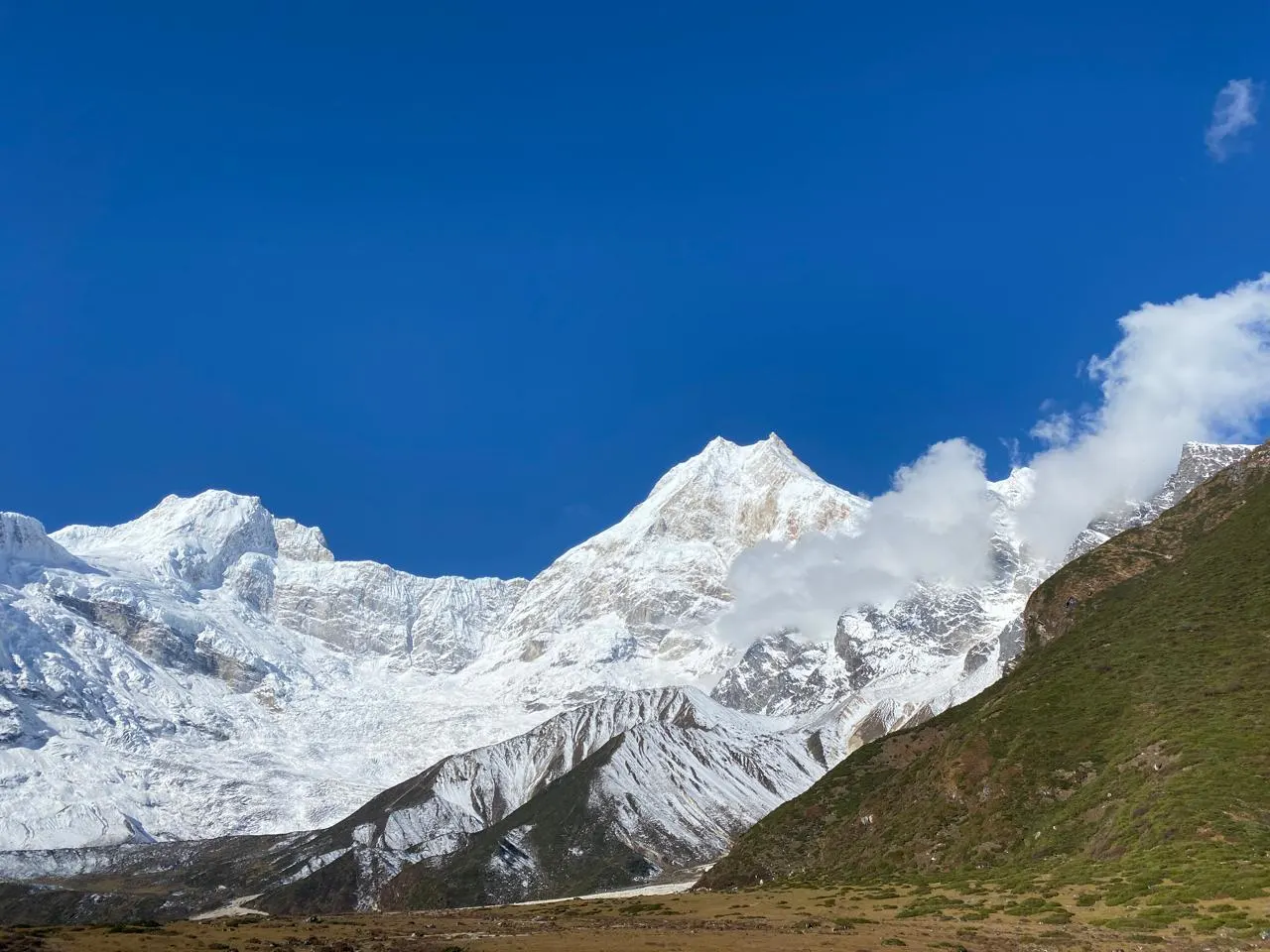 View Trip |
Itinerary At a Glance
| Day | Route | Approx. Time |
| 1 | Drive: Kathmandu → Soti Khola (730m) | 6–8 hrs |
| 2 | Trek: Soti Khola → Machha Khola (890m) | 6–7 hrs |
| 3 | Trek: Machha Khola → Jagat (1,400m) | 6–7 hrs |
| 4 | Trek: Jagat → Lokpa (2,040m) | 6–7 hrs |
| 5 | Trek: Lokpa → Chumling (2,386m) | 4–5 hrs |
| 6 | Trek: Chumling → Chhokangparo (3,010m) | 5–6 hrs |
| 7 | Trek: Chhokangparo → Nile (3,361m) via Piren Phu Cave | 4–5 hrs |
| 8 | Trek: Nile → Mu Gompa (3,700m) | 3–4 hrs |
| 9 | Trek: Mu Gompa → Chhokangparo (3,010m) | 6 hrs |
| 10 | Trek: Chhokangparo → Chumling (2,386m) | 6–7 hrs |
| 11 | Trek: Chumling → Deng (1,860m) | 6–7 hrs |
| 12 | Trek: Deng → Namrung (2,900m) | 6–7 hrs |
| 13 | Trek: Namrung → Samagaun (3,530m) | 8–9 hrs |
| 14 | Acclimatization day in Samagaun | — |
| 15 | Trek: Samagaun → Larkya La Phedi / Dharamsala (4,460m) | 5–6 hrs |
| 16 | Trek: Dharamsala → Bhimtang via Larkya La Pass (5,160m) | 7–8 hrs |
| 17 | Trek: Bhimtang → Gho (2,550m) | 4–5 hrs |
| 18 | Trek: Gho → Tal (1,700m) | 4–5 hrs |
| 19 | Drive: Tal → Besisahar → Kathmandu | 9–10 hrs |
Trip Logistics: What Actually Happens Day to Day
Airport Pickup Free pickup and drop-off at Tribhuvan International Airport is part of every booking. Look for a Visit View Nepal Treks rep holding a sign with your name on arrival — they’ll get you to your hotel by private vehicle, and do the same in reverse when you fly home.
Trek Briefing We run an online briefing before you even land in Nepal, covering the essentials. We’ll also do a gear check to make sure nothing important got left behind.
Getting the Trek Started Plan to arrive in Kathmandu at least two days before departure, and build in one extra weekday specifically for permits — we need a full working day (plus your passport and Nepal visa) to secure the special Manaslu permit. If you missed the online briefing, this window also lets us run one in person. On day three, we head out to Soti Khola to start the trek proper.
Where You’ll Sleep The package covers 18 nights of lodge-to-lodge accommodation at the best places available along the route. You’ll need three nights in a Kathmandu hotel before and after the trek — not included in the package, but Kathmandu has options for every budget.
What You’ll Eat At altitude, especially circling an 8,000m peak, your body needs solid fuel — carbs, protein, the works. Food choices get simpler the higher you climb, but you won’t go hungry. The package covers 19 breakfasts, 19 lunches, and 18 dinners, all full board.
Typical breakfast spreads include oatmeal, cornflakes, French toast, Tibetan bread or chapati, local tsampa porridge, eggs, pancakes, muesli, fruit, and a good range of teas and coffees. Lunch and dinner menus lean on dal bhat, Tibetan bread, soups, Sherpa stew, momos, pasta and noodle dishes, thukpa, pizza, vegetable curries, and the occasional dessert like rice pudding or apple pie.
Meals are freshly prepared and geared toward keeping you fueled — a mix of traditional Nepali, Asian, and Western dishes, though the menu naturally narrows the higher we go. We’d strongly recommend leaning into warm liquids at altitude — ginger tea, lemon tea, and garlic soup especially, which locals swear by for altitude adjustment. We’d also steer you away from meat at higher elevations (hygiene at that altitude is hard to guarantee), along with dairy, alcohol, caffeine, and hot chocolate, all of which make altitude adjustment tougher.
Luggage Limits 9kg per trekker, carried by a porter shared between two people (18kg combined). Bring a small day pack for valuables and anything you want on hand during the walk. Excess baggage can be left at your hotel or our store, free of charge.
A Typical Trekking Day Mornings start with a hot cup of tea or coffee before breakfast, and we’re usually on the trail by 7–8am depending on the day’s distance. After three to four hours of walking, we stop for lunch en route, rest for about an hour, then continue with a shorter afternoon push — generally two to three hours.
Once we reach the night’s lodge, there’s time to snack, explore the village, and settle in before dinner, typically served between 6 and 7pm. Evenings are relaxed — conversation, a briefing on the next day’s plan from your guide, maybe a game of cards or Monopoly, a mountaineering documentary, or a few words of Nepali picked up from the crew before heading to bed.
Power and Water Charging for cameras and phones is available at lodges, usually for a small extra fee. For drinking water, you can buy bottled water or boiled water at tea houses, though we recommend purification tablets as a backup.
Staying Connected Wi-Fi is available at most lodges for an added charge, though signal gets patchier the higher you climb — at altitude, phone calls become the more reliable option. Your guide checks in with our office daily to confirm everyone’s safe and doing well. A local SIM card is easy to pick up in Kathmandu, though don’t expect strong signal once you’re deep in the mountains.
Tipping Tipping is customary in Nepal and entirely at your discretion, based on how the trip went for you. Most groups prefer to pool tips together and hand them over at the end of the trek.
Wrapping Up the Trek On day 19, we take a local bus or jeep from Tal to Besisahar, then on to Kathmandu, following the Prithvi Highway east. That evening, we host a farewell dinner to celebrate the trek.
Feedback and Certificates At the farewell dinner, you’ll receive a printed trek completion certificate — and we’d genuinely love to hear how the trip went for you.
Want to Stay Longer? Plenty of trekkers add a few extra days once the trek wraps up. We can help arrange a Chitwan jungle safari, paragliding, white-water rafting, canoeing, or general sightseeing around Kathmandu.
Heading Home On departure day, we’ll pick you up by private vehicle and get you to Tribhuvan International Airport in time for your flight.
Best Time to Trek Tsum Valley and the Manaslu Circuit
The sweet spots are March to May and September to November — check our Manaslu travel guide for a month-by-month weather breakdown.
Spring (March–May) Our pick for the best overall trekking conditions. Skies clear up, temperatures climb from mid-March, and the mountain views are about as sharp as they get. Rhododendrons bloom in full color along the lower trails, and by late March the winter snow has cleared enough to open up Larkya La Pass. Daytime temps can hit 24°C in the lower valleys (Soti Khola to Ghap) and up to 18°C higher up (Lho to Bhimtang), though nights in the high country can still drop to -4°C.
Autumn (September–November) The other prime season, and the busiest one — for good reason. Once the monsoon clears by late August, skies stay reliably clear from mid-September onward. This season also overlaps with major Nepali festivals like Dashain, Tihar, and Chhath. Daytime temps reach around 25°C lower down and 15°C higher up, with nights in the high regions dropping to around -6°C. Come December, snow starts closing in — the Dharamsala lodge shuts down, and crossing Larkya La becomes essentially impossible until conditions improve.
Visa and Entry Requirements
Every nationality except Indian citizens needs a visa to enter Nepal. On-arrival visas are available at Tribhuvan International Airport and at land border crossings.
You’ll need a passport valid for at least six months, one passport-size photo, and the visa fee — currently $50 USD for 30 days, payable in cash in major currencies. Children under 10 travel free.
Citizens of China and SAARC countries (Bangladesh, Bhutan, India, Maldives, Pakistan, Sri Lanka) also get free visas.
If you’re a citizen of Nigeria, Ghana, Zimbabwe, Eswatini (Swaziland), Cameroon, Somalia, Liberia, Ethiopia, Iraq, Palestine, or Afghanistan, on-arrival visas may not be available — check with your nearest Nepalese embassy before you travel.
Visa rules can shift without much notice, so it’s worth double-checking current requirements at Nepal’s official immigration site before you fly. And whatever your nationality, we’d suggest padding a few extra days onto your itinerary — that way, if the trek runs long for any reason, your international flight home isn’t at risk.
| Manaslu Circuit Trek – 12 Days Trekking in Nepal From To US$ 675 Save US$ 290 | 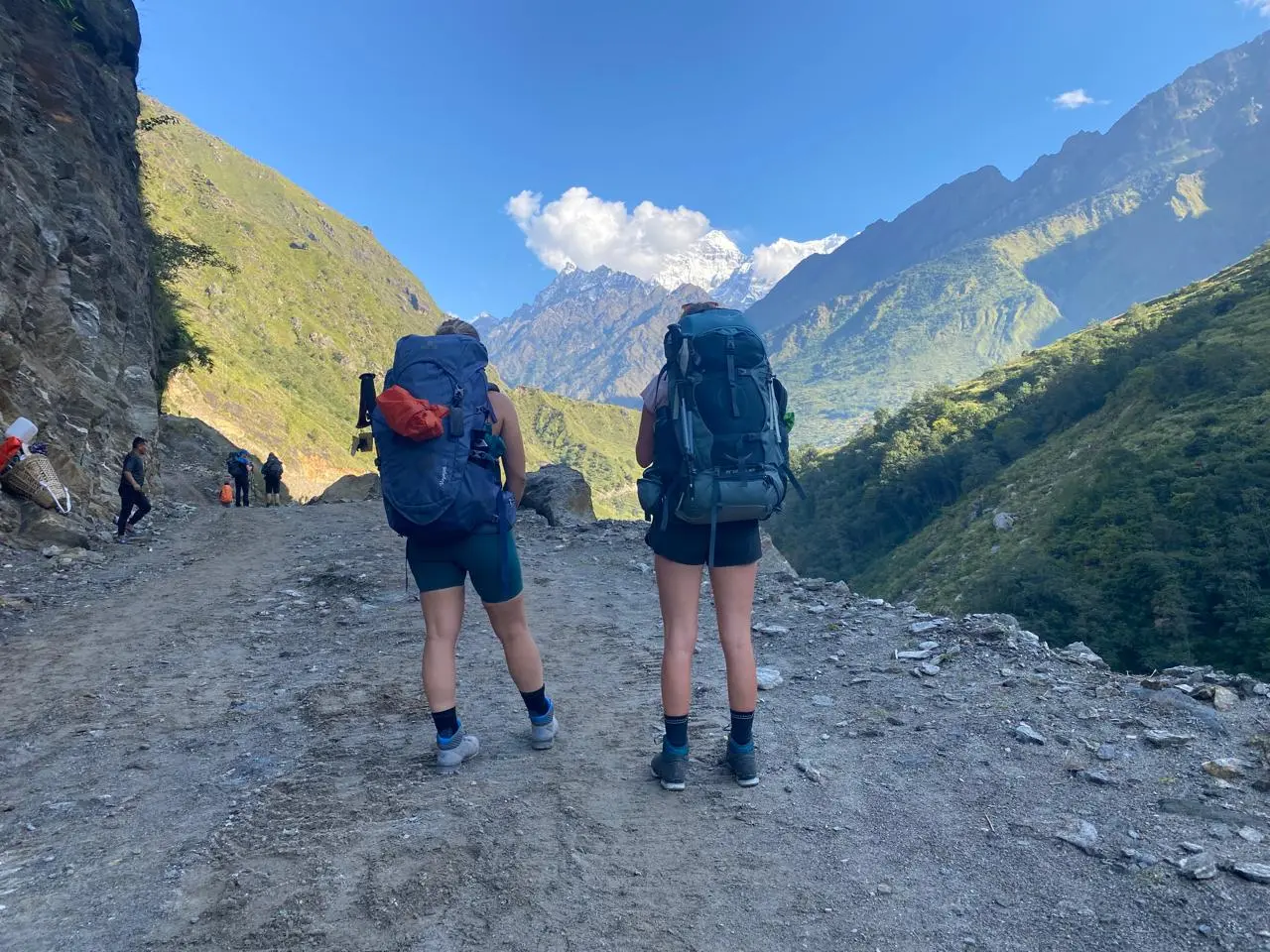 View Trip |
Tsum Valley & Manaslu Circuit Trek: Safety, Booking, and Everything Else You’re Probably Wondering About
We get a lot of the same questions from trekkers considering this route, and rightly so — it’s a serious high-altitude journey through a restricted region, and you deserve straight answers before you commit. Here’s what nearly 15 years of running this trek has taught us about what you actually need to know.
Travel Insurance: Non-Negotiable, and Here’s Why
Let’s be upfront about this one. The Tsum Valley and Manaslu Circuit Trek is a genuinely challenging route, and it comes with real high-altitude risks — altitude sickness, landslides, and the kind of unpredictable events you can’t fully plan around. That’s why travel insurance isn’t optional here; it’s compulsory.
Every trekker needs to send us a copy of their comprehensive travel insurance certificate before we set foot on the trail. Your policy needs to cover medical treatment and emergency repatriation, including helicopter rescue and evacuation, up to 6,000m — the altitudes we’re actually working at on this route.
We don’t sell insurance ourselves, but we’ve seen enough policies over the years to point you toward providers that have worked well for past clients. Once you book, send us your insurance details — if anything goes wrong out there, we’ll use that policy to move fast on rescue and cover your medical costs without delay.
Money Matters: Currency and Cash in Nepal
The local currency is the Nepali Rupee (NPR), and at the time of writing, roughly 153 NPR gets you 1 USD — though rates shift, so double-check before you travel.
You’ll find legitimate money changers and banks all over Kathmandu and Thamel, with rates posted clearly. If you’re carrying Indian Rupees, know that only the 100 and 2000 denomination notes are legal tender in Nepal.
Our honest advice: skip the traveler’s cheques. They sound secure on paper, but in practice they mean long queues and steep bank commissions. Cash exchange is simpler, and ATMs are everywhere in Kathmandu and Thamel, many open 24/7. Foreign cards can withdraw up to NPR 35,000 per transaction, with a flat NPR 500 processing fee. If you’d rather exchange through a bank or official money changer, expect a service charge of around 4% or more.
Budgeting for Extras
Your package covers the trek itself, but you’re responsible for your own meals and accommodation in Kathmandu, which — good news — has options to fit any budget. Beyond that, set aside cash for things like your travel insurance, visa fees, snacks, hot and cold drinks on the trail, tips for your guide and porter, and any souvenirs you pick up along the way. We’d recommend bringing major foreign currency in cash and exchanging it once you’re in Kathmandu, rather than trying to source Rupees before you arrive.
How Tough Is This Trek, Really?
Let’s not sugarcoat it — this is a challenging trek. We’re pushing into the remote, isolated stretch of Tsum Valley, taking a proper rest day in Samagaun (3,530m) to acclimatize, and then tackling Larkya La Pass to close out the Manaslu Circuit leg.
On lower ground (below 3,500m), expect 5 to 7 hours of walking a day. Once you’re above 3,500m, days shorten to roughly 3 to 4 hours — partly because the terrain gets tougher, and partly because we want plenty of time to stop and take in those views.
Higher altitude simply asks more of your body than lower elevation trekking does. You’ll deal with long climbs, steep descents, and the odd stretch of straightforward, easy trail mixed in. Previous hiking experience helps, but you don’t need technical mountaineering skills to do this trek — if you can comfortably walk 5 to 6 hours a day at a steady pace with a light day pack, you’re in good shape for this.
Some days run long, so general fitness matters. A few weeks of regular cardio training before you fly out will make a noticeable difference in how much you enjoy the trek — and trust us, the fitter you show up, the more you’ll actually get to appreciate where you are instead of just grinding through it.
Beyond fitness, we ask that everyone joining come in good health, with a solid mental attitude and the determination to push through a long day when needed. If you have a pre-existing heart, lung, or blood condition, please flag it with us before booking so we can plan accordingly.
How We Keep You Safe
Client safety isn’t a line item for us — it’s the whole job. Our guides carry full first-aid kits and the equipment needed to handle whatever the mountain throws at us, and every guide has completed extensive first-aid training.
If altitude sickness shows up, your trek leader has full authority to decide whether the group continues or descends immediately — no debate, no pushing through it if it’s not safe. In a genuine emergency, we can arrange helicopter evacuation, covered through your insurance policy. We also trek as a cohesive group throughout, which keeps everyone accounted for and safer as a whole.
Acclimatization: Why We Build In a Rest Day
The built-in rest day at Samagaun (3,530m) isn’t filler — it’s there specifically to reduce your risk of acute mountain sickness. Starting from Soti Khola (730m), we spend several days at lower elevation exploring Tsum Valley before climbing toward Samagaun, giving your body real time to adjust gradually rather than forcing a rapid ascent.
Altitude sickness is preventable, but it’s not something to shrug off if symptoms show up — left unchecked, it can turn serious fast. Our guides are experienced Himalayan trekkers with solid first-aid training, and we use oximeters throughout the trek to track your blood oxygen levels, which helps us catch problems early rather than after they’ve escalated.
Your guide will walk you through the basics of altitude prevention, but the two biggest levers are pacing yourself and drinking enough water — aim for at least 4 liters a day. If symptoms get serious, the only real fix is descending immediately, and again, that call sits with your trek leader based on how the whole group is doing. Some people are simply more susceptible than others, and that’s completely normal — it’s not about fitness level.
Meet the Team Behind Your Trek
Our guides are experienced, certified, and — just as important — genuinely good company on the trail. Every guide holds a government-issued trekking certificate and has years of real mountain experience behind them.
Porters carry the bulk of your gear, with one porter assigned per two trekkers (18kg combined, or 9kg per person). If you’d rather have a dedicated porter to yourself, we can arrange that too.
Our crew are almost entirely local Himalayan people, which means they’re built for this terrain and altitude in a way that’s hard to match. We take care of our staff properly — fair wages, insurance, gear, food, lodging, and medical care if they get sick or hurt on the job. We genuinely believe a happy crew makes for a better trek, and it shows in how our guides and porters treat clients on the trail.
Our team holds: – Intensive Wilderness First Aid certification – Government-issued trekking guide licenses – Fluency in English and other major languages – Conservation and biodiversity training – Rock climbing experience
Booking Your Trek
Visit View Nepal Treks is a government-registered, bonded operator with more than a decade in business, and we’re members of both the Trekking Agency Association of Nepal (TAAN) and the Nepal Mountaineering Association (NMA) — so you’re booking with a company that’s fully accountable.
To lock in your spot, we ask for a 10% deposit, payable by bank transfer, Western Union, or directly through our website. Within a week of booking, please email us your passport copy, passport photos, travel insurance policy, and your flight details. The remaining balance can be settled in cash, by bank transfer, or by credit card once you’re in Nepal — we’ll send you full payment details ahead of time.
Booking Last-Minute? We get it — sometimes plans come together fast. We do accommodate last-minute bookings, but full payment is required two days before departure, and we still need one working day to secure your Manaslu and Tsum Valley permits. Just know that with a compressed timeline, we can’t be held responsible for delays caused by factors outside our control — weather, lodge availability, that sort of thing. Call us at 977-9840055491 (ask for Paul) or email info@visitviewnepaltrek.com to talk through the details.
Booking a Private Trek Permit rules mean we need a minimum of two trekkers for this route. Beyond that, we can accommodate groups of any size — we add an assistant guide once a group hits 12 or more — and larger teams unlock better group discounts. If you come to us with your own group, we won’t add outside trekkers to it.
Responsible Travel
We take the environmental side of trekking seriously. We work alongside the Kathmandu Environmental Education Project (KEEP) to keep our trips as low-impact as possible, balancing what trekkers want from the experience with what actually works for the communities living in these mountains.
Detailed Itinerary
Day 1: Kathmandu to Soti Khola (730m)
Day 2: Soti Khola to Machha Khola (890m)
Day 3: Machha Khola to Jagat (1,400m)
Day 4: Jagat to Lokpa (2,040m)
Day 5: Lokpa to Chumling (2,386m)
Day 6: Chumling to Chhokangparo (3,010m)
Day 7: Chhokangparo to Nile (3,361m) via Milarepa’s Piren Phu Cave
Day 8: Nile to Mu Gompa (3,700m)
Day 9: Mu Gompa to Chhokangparo (3,010m)
Day 10: Chhokangparo to Chumling (2,386m)
Day 11: Chumling to Deng (1,860m)
Day 12: Deng to Namrung (2,900m)
Day 13: Namrung to Samagaun (3,530m)
Day 14: Rest Day in Samagaun
Day 15: Samagaun to Larkya La Phedi / Dharamsala (4,460m)
Day 16: Dharamsala to Bhimtang (3,720m) via Larkya La Pass (5,160m)
Day 17: Bhimtang to Gho (2,550m)
Day 18: Gho to Tal (1,700m)
Day 19: Tal to Besisahar to Kathmandu
Inclusions
What's included?
- Private airport pickup and drop-off between Tribhuvan International Airport and your Kathmandu hotel
- All ground transport for the trek itself — Kathmandu to Soti Khola via Arughat at the start, and local bus from Tal back to Besisahar and Kathmandu at the end
- 18 nights in the best available tea houses and lodges along the route, typically twin-sharing rooms
- Full board throughout the trek: 19 breakfasts, 19 lunches, and 18 dinners, one main course per meal
- Water purification tablets, so you’re not stuck buying bottled water at every stop
- Fresh seasonal fruit daily
- A government-licensed, English-speaking Visit View Nepal Treks guide, plus a porter shared between every two trekkers (9kg luggage limit per person)
- Full coverage of your guide and porter’s wages, meals, insurance, lodging, transport, and gear
- Manaslu and Tsum Valley Special Permits, plus Conservation Area Permits (Manaslu and Annapurna both)
- All government taxes and official fees tied to the trek
- Emergency rescue arrangements if a health situation calls for it
- A trek medical kit, including a pulse oximeter to keep an eye on your blood oxygen at altitude
- A Visit View Nepal Treks t-shirt and cap as a keepsake
- A printed trek completion certificate
- A farewell dinner in Kathmandu once you’re back
- Sleeping bag, down jacket, and duffle bag (shared between two trekkers) if you don’t already own your own
- Free storage at our Kathmandu store for anything you don’t need on the trail
What's not included?
- International flights to and from Nepal
- Hotel stays in Kathmandu before and after the trek, including any extra nights caused by early arrival, delayed departure, or an early return off the trail
- Meals in Kathmandu outside the trek dates
- Tips for your guide and porter
- Nepal’s entry visa fee, paid on arrival at the airport
- Travel insurance — this is compulsory, and it must cover high-altitude emergency rescue and evacuation
- Personal spending: snacks, bottled or boiled water, tea/coffee, alcohol, hot showers, Wi-Fi, phone calls, battery charging, laundry, extra porters, and similar costs
- Your own personal clothing and trekking gear
- Excess baggage beyond the 9kg per-person limit
- Any extra costs caused by things outside our control — landslides, weather delays, forced itinerary changes, illness, strikes, or shifts in government policy
- Anything not explicitly listed under “included”
Equipment (Essential Gears)
What to Pack?
Packing right makes a bigger difference on this trek than people expect — you’ll be moving through everything from subtropical river valleys to high alpine passes in the same three weeks. Bring only what you actually need; anything extra can be stored for free at our Kathmandu store. Since porters are shared between two trekkers and cap out at 18kg combined, that works out to 9kg each — so it’s worth pairing up with your trekking partner and packing a shared duffle bag (60L or more).
Upper Body - Moisture-wicking t-shirts, short and long sleeve - Thermal base layers (lighter for warmer months, heavier for cold) - Fleece and an insulated puffy jacket - Down jacket for the higher, colder sections - Waterproof, windproof outer shell - Lightweight breathable long-sleeve trekking shirt - Sports bra (synthetic) for women - Waterproof rain jacket or poncho
Head and Face - Wide-brimmed sun hat - Warm beanie or ear-covering hat - Buff, scarf, or neck gaiter - UV-protective sunglasses - High-SPF sunscreen and lip balm - Lightweight headlamp with spare batteries
Hands - Insulated warm gloves or mittens - Lightweight liner gloves - Waterproof outer gloves for snow and wet conditions
Lower Body - Quick-dry trekking pants and underwear - Convertible or full-length trekking trousers - Thermal leggings or base layers - Insulated trousers for colder stretches - Lightweight casual pants for evenings in the tea houses
Footwear - Broken-in trekking boots with good ankle support and grip - Wool or synthetic trekking socks - Light camp shoes or sandals, handy for river crossings - Gaiters to keep mud, water, and debris out - Microspikes or crampons for icy sections near the pass (seasonal)
Backpack, Sleeping, and Support Gear - Duffle bag or rucksack, 50–60L, shared between two trekkers - Day pack, 20–30L, with a rain cover - Adjustable, collapsible trekking poles - Reusable water bottle or hydration bladder (2L minimum) - Water purification tablets, filter, or UV purifier - Sleeping bag rated to -5°C/-10°C - Earplugs — tea house walls are thin
Electronics and Documents - Camera or smartphone - Power bank and charging cable - Two-pin plug adapter - Passport photocopies and passport photos, kept in a waterproof bag
Toiletries - Toothbrush and toothpaste - Quick-dry travel towel - Biodegradable soap or shampoo - Toilet paper in a ziplock bag - Nail clippers, wet wipes - Feminine hygiene products - Hand sanitizer
Medications - Any personal medication you rely on (inhalers, allergy meds, etc.) - Blister care (Compeed or moleskin) - Throat lozenges — the dry mountain air is harder on your throat than you’d think - Basic first aid kit: band-aids, antiseptic wipes, pain relievers, and Diamox
Optional but Handy - Energy bars and snacks - Journal or notebook - A book or e-reader - Binoculars - A small multi-tool - Pee bottle or funnel for women - Comb
If you’re missing any of the big-ticket items, we can lend you a used duffle bag, down jacket, or sleeping bag at no charge.
Trip Map
FAQs
1) Where is the Manaslu Tsum Valley region located?
It sits in Gorkha District, in western Nepal. Manaslu falls within the Manaslu Conservation Area, while Tsum Valley is a hidden side-valley reached via the Budhi Gandaki Valley.
2) How long is the trek?
Typically 19 days, factoring in acclimatization and a comfortable pace. This includes the Tsum Valley detour, which adds extra days beyond the standard Manaslu Circuit.
3) What are the standout highlights?
Larkya La Pass (5,160m), the Piren Phu cave, Mu Gompa, and the cultural richness of Tsum Valley itself — its monasteries, Tibetan heritage, and Buddhist traditions. You’ll also get incredible views of Manaslu, Ganesh Himal, and Himalchuli along the way.
4) Is this trek right for all fitness levels?
It’s moderate to strenuous, so a solid fitness base helps. You’ll cross forests, valleys, and a genuinely demanding high mountain pass, with real altitude gain to contend with. If you’re generally fit and give yourself time to prepare, this trek is absolutely achievable.
5) What makes this trek different from other Nepal treks?
It pairs a serious high-altitude circuit around Manaslu with deep cultural immersion in Tsum Valley — hidden Tibetan Buddhist villages, some of the country’s best peak views, and a stop at Mu Gompa, one of the highest monasteries in the region. It’s also far quieter than Everest or Annapurna, so you get a more authentic, uncrowded Himalayan experience.
6) Can I book this as a private trek?
Yes.
7) How fit do I actually need to be?
Given the steep climbs, long days, and high altitude, you’ll want solid cardiovascular fitness, decent leg strength, and good overall stamina.
8) Are beginners welcome?
Yes — as long as you’re reasonably fit and willing to push yourself on the tougher days. Prior trekking experience helps but isn’t required.
9) How should I train beforehand?
Focus on cardio (running, cycling, swimming), leg-strengthening exercises, and a few practice hikes with a loaded pack to get used to the weight and rhythm of trekking.
10) What permits do I need?
Three: the Restricted Area Permit (RAP) for Manaslu Tsum Valley, the Manaslu Conservation Area Permit (MCAP), and the Annapurna Conservation Area Permit (ACAP).
11) Are permits included in the package?
Yes, we handle all of it.
12) Where do permits actually come from?
Technically through the Nepal Tourism Board in Kathmandu, though in practice your trekking agency arranges these for you.
13) Is travel insurance really mandatory?
Yes, no exceptions.
14) What does my insurance need to cover?
Medical treatment and helicopter evacuation, valid up to the highest altitude on the route.
15) Do I need a visa?
Yes, unless you’re Indian. You can apply online ahead of time or get a visa on arrival at Tribhuvan International Airport — bring a passport photo, a passport valid for at least six months, and the current fee of $50 USD for 30 days.
16) Do I need a guide?
Yes — it’s mandatory, since this is a restricted area under Nepali regulation.
17) What do guides and porters actually do?
Guides handle navigation, permits, and give you the local context and history along the way. Porters carry your main luggage so you’re only managing a light day pack.
18) Can I trek this route independently, without a guide?
No. Independent trekking in this region has been prohibited since restricted-area rules changed in April 2023.
19) What’s the accommodation like?
Tea houses and lodges along the route, with basic facilities — a bed, blankets, and shared bathroom amenities.
20) Do lodges have electricity and hot showers?
Most do, though usually for an extra fee, and amenities thin out the higher you climb.
21) What about Wi-Fi and charging?
Available in most tea houses for a small charge, though don’t expect fast or fully reliable connections, especially at altitude.
22) What food will I get on the trek?
A mix of Nepali, Tibetan, and Western dishes — dal bhat, noodles, soups, sandwiches, bread, and more, all designed to keep your energy up for long trekking days.
23) Can you accommodate vegetarian or vegan diets?
Yes — just let your guide know your preferences ahead of time.
24) Is the drinking water safe, or should I bring purification tablets?
Bottled water is available at shops along the route, but we’d rather you bring a reusable bottle and buy boiled or filtered water instead — better for the environment. Purification tablets or a filter are still a smart backup. Whatever you do, avoid drinking directly from taps, wells, or rivers.
25) What’s the best season to trek?
Spring (March–May) and autumn (September–November) — stable weather, comfortable temperatures, and the clearest mountain views.
26) How much does weather actually affect the trek?
Good weather means clearer trails and better views; rain or snow can make certain sections tougher going. At altitude, conditions can shift quickly, so flexibility matters.
27) Is it safe to trek during monsoon or winter?
It’s possible, but harder — monsoon brings rain, winter brings snow, and both call for extra gear and preparation.
28) What health risks should I know about?
Altitude sickness, dehydration, cold exposure, and the usual bumps and strains that come with rugged terrain.
29) Is altitude sickness a real concern here?
Yes — which is exactly why acclimatization, hydration, and a sensible pace matter so much on this route.
30) What happens if there’s an emergency?
Your guide assesses the situation and arranges helicopter evacuation if it’s needed, covered by your travel insurance.
31) What should I pack?
Warm layers, solid trekking boots, a sleeping bag, trekking poles, rain protection, sun protection, and a first aid kit — see our full packing list for the details.
32) Do I need my own sleeping bag?
Tea house bedding usually provides enough warmth, but bringing a sub-zero-rated sleeping bag of your own is a smart extra layer of comfort.
33) Are trekking poles worth bringing?
Definitely — they help a lot with stability on uneven ground and take real strain off your knees during descents.
34) How far ahead should I book?
At least a month out is ideal, especially in peak season, to lock in permits and lodging — though we do have options for last-minute bookings if needed.
35) How does payment work?
A 10% deposit confirms your booking, payable by bank transfer, credit card, Wise, or Western Union. The remaining balance is due once you arrive in Kathmandu, where cash is also accepted.
36) What about cancellations or refunds?
Check our terms and conditions page for the full policy details.
37) How do I get to the trek’s starting point?
By road — a drive from Kathmandu to Soti Khola kicks things off.
38) Do I need a domestic flight to start the trek?
No, road transport gets you there.
39) How do I get back after finishing the trek?
We drive you back to Kathmandu from the endpoint at Dharapani. A private jeep is available for an added cost if you’d prefer more flexibility than the local bus.