
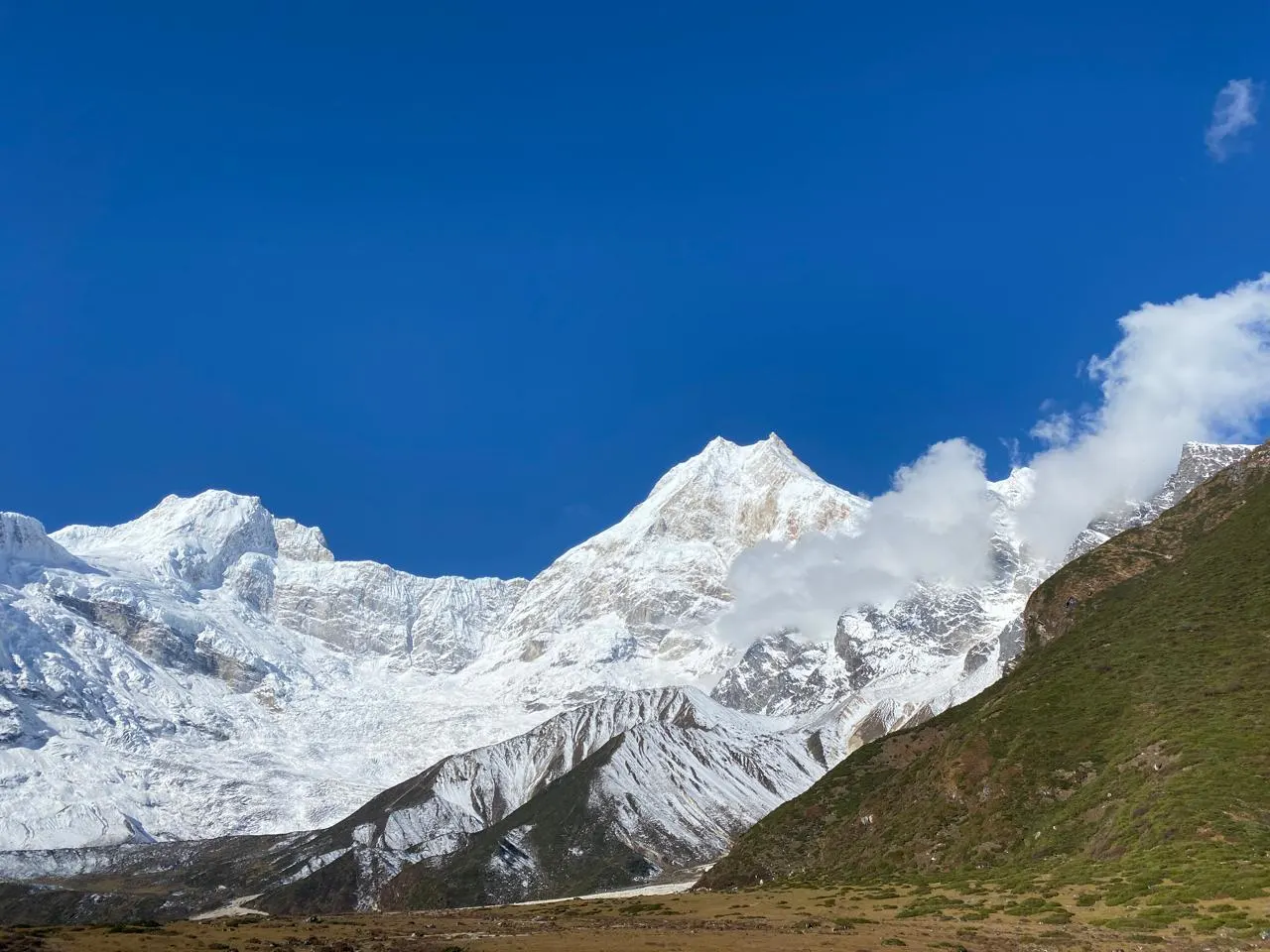
Tucked away in Nepal’s Gorkha district, the Manaslu region is one of those trails that keeps trekkers talking long after they’ve flown home — and once you’ve walked it yourself, it’s easy to see why. We’ve guided groups through here for years, and the Manaslu Circuit Trekking route still delivers something few other treks in Nepal can match: a genuinely up-close encounter with Mount Manaslu, the world’s eighth-highest peak, without the crowds you’ll find on the Everest or Annapurna trails.
What makes this circuit special isn’t just the big mountain, either. As you move through the valley, the skyline keeps shifting — Himlung Himal, Cheo Himal, Nemjung, Gyaji Kang, Annapurna II, and Kang Guru all take their turn framing the trail, giving you one of the most varied mountain panoramas anywhere in the country.
Walking Through Wild, Protected Terrain
Much of the route runs through the Manaslu Conservation Area, a government-protected zone that’s as much a highlight as the mountains themselves. Keep your eyes open here — this is prime territory for spotting red pandas, Himalayan tahr, musk deer, blue sheep, grey wolves, Himalayan goral, woolly hares, horseshoe bats, and black-lipped pikas, and if you’re lucky (and patient), even the elusive snow leopard or Asiatic black bear.
The trek’s high point, quite literally, is the Larkya La Pass at 5,167 meters — one of the longest and most dramatic mountain passes in Nepal. Standing up there with glaciers, valleys, and snow peaks stretching in every direction is the kind of moment that stays with you.
More Than a Mountain Trek — A Cultural Journey
What keeps us recommending this trail to trekkers year after year is what happens off the peaks. The Manaslu region is home to a rich mix of communities — Gurung, Nubri, Tsumba, Lama, Sherpa, Bhotia, Brahmin, and Chhetri — and the trail winds straight through their villages and daily lives.
Villages like Namrung, Lho, Samagaon, and Samdo give you a real, unfiltered look at Himalayan life: traditional dress, local dialects, folk stories, festivals, and rituals that haven’t changed much in generations. Along the way, you’ll pass ancient monasteries and gompas — Kargyu Chholing, Sama Gompa, Mu Gompa, Ribang Gompa, Rachen Gompa, Lho Monastery, and Shringi Gompa at Bihi Pungyen, among others — each one a living piece of Tibetan Buddhist heritage and local hospitality.
What’s Coming Up in This Guide
In the sections ahead, we’ll walk you through everything you need to plan this trek properly, drawing on what we’ve learned from years of leading groups through the region:
- Why the Manaslu Circuit deserves a spot on your Nepal bucket list
- The best time of year to go
- What the trek actually costs
- Permits you’ll need and how to sort them
- The physical and logistical challenges to prepare for
- Practical tips for making the most of your journey
Whether you’re an experienced trekker chasing a quieter alternative to the classic routes, or planning your first big Himalayan adventure, this guide will give you everything you need to trek Manaslu with confidence.
Why Trek the Manaslu Circuit?
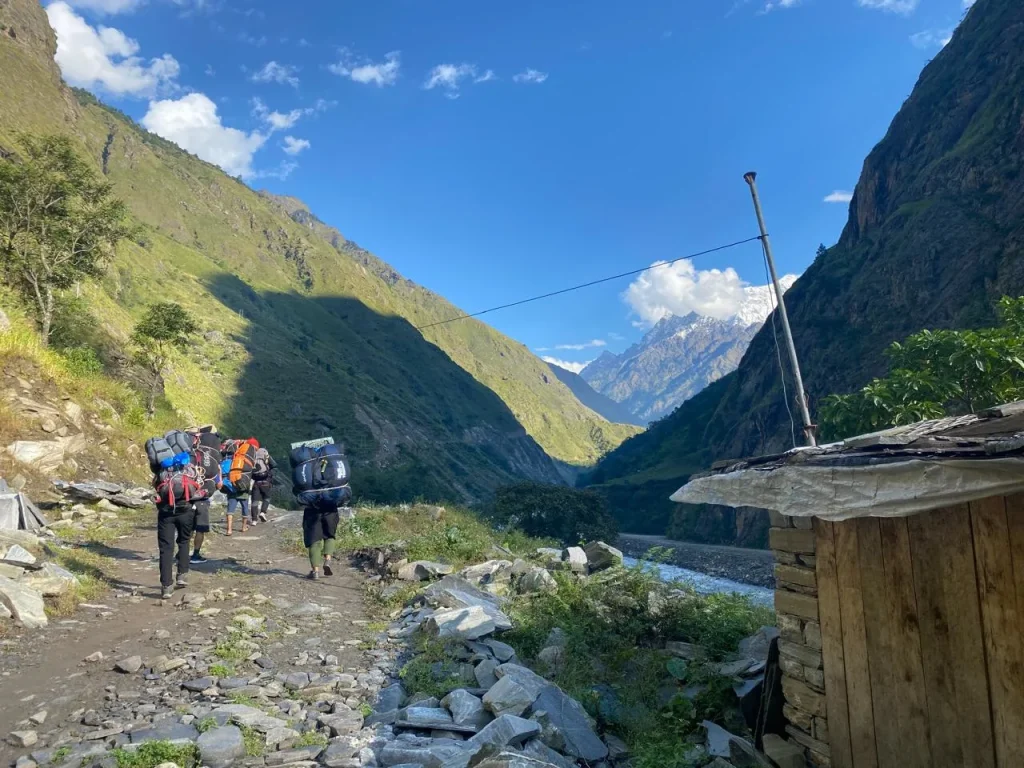
Of all the trails we run in Nepal, Manaslu Circuit Trekking is the one we point people toward when they tell us they’ve “already done” Everest Base Camp or Annapurna Base Camp and want something wilder. Because it’s harder to reach and less commercialized, Manaslu simply doesn’t see the foot traffic those two classics do — and that’s exactly the point for trekkers craving quiet trails, fewer teahouse queues, and a closer feel for raw nature.
That said, going remote here doesn’t mean giving up the views. You still get front-row seats to the world’s eighth-highest peak, plus a string of equally striking neighbors. Add in an off-the-beaten-path route, the high drama of Larke La Pass, and the wildlife-rich Manaslu Conservation Area, and you’ve got a trek that rivals — arguably beats — the big-name circuits. Here’s a closer look at what makes it worth the effort.
The Mountain Views
Let’s start with the obvious draw: the scenery is spectacular. Along the way, you’ll get eye-to-eye with Mt. Manaslu, Kang Guru, Annapurna II, Cheo Himal, Himlung Himal, Gyaji Kang, and Nemjung — a lineup of giants that changes shape with almost every bend in the trail.
Remote, Traditional Villages
This is where Manaslu really sets itself apart. The region’s isolation has kept its villages largely untouched by modern development, and walking through them feels like stepping back in time. Settlements like Jagat, Samdo, Samagaon, Namrung, and Lho give trekkers a genuine window into Nepalese tradition and daily life. They’re simple, yes — no five-star luxury here — but what they lack in infrastructure, they more than make up for in warmth. We’ve seen trekkers form some of their most memorable travel connections in these villages.
Tsum Valley
Branch off into Tsum Valley and you’ll find one of the most spiritually rich corners of the Manaslu region — home to the Indigenous Tsumba community and set against the dramatic backdrop of Ganesh and Shringi Himal. It’s a valley steeped in Buddhist tradition, with prayer wheels, fluttering prayer flags, monasteries, and chortens dotting the trail. Local legend even holds that the revered Buddhist master Milarepa once meditated in caves scattered through the valley. If this side trip appeals to you, our Manaslu Tsum Valley Trekking itinerary is built specifically to explore it.
Larkya La Pass
No description of this trek is complete without Larkya La Pass, the circuit’s high point at roughly 5,160 meters. It’s a demanding push — thin air, a long summit day, and unpredictable weather all play a part — but crossing it delivers one of the most rewarding “we made it” moments you’ll find on any trek in Nepal.
Fewer Crowds, More Solitude
Finally, there’s the simple fact that not many people know about this trek yet. For city dwellers chasing a genuine escape, that matters more than it might sound. It’s easy to romanticize solitude, but that feeling evaporates fast if you’re sharing every viewpoint and teahouse with dozens of other groups. Manaslu still delivers on that promise of real seclusion — the kind of experience that’s becoming harder to find anywhere else in Nepal.
Best Time to Trek the Manaslu Circuit
One question we get from almost every trekker planning this route: “when should I actually go?” The honest answer is that Manaslu can technically be trekked year-round, but if you want the trip to actually go smoothly — good trail conditions, clear peaks, comfortable nights — you’ll want to time it for spring or autumn. Those are the two windows we build almost all our departures around, and for good reason.
Winter and summer, on the other hand, we tend to steer trekkers away from unless they know exactly what they’re signing up for. Both seasons bring tougher climate conditions to the high Himalaya, and we’d rather set that expectation upfront than have someone find out the hard way at 4,000 meters. Here’s how each season actually plays out on the trail.
Spring (March to May)
Spring is, hands down, one of the best times to trek the Manaslu Circuit, and it’s usually our first recommendation to first-timers. Temperatures sit at a comfortable middle ground, rhododendron forests come alive with color along the lower trail, and skies tend to stay clear enough for uninterrupted mountain views day after day. It’s a forgiving season, too — if you’re newer to high-altitude trekking, spring gives you the best odds of a smooth, enjoyable crossing of the circuit.
Autumn (September to November)
Autumn is the other heavyweight contender, and depending on who you ask, it might just be the best season for trekking in Nepal overall, not just on Manaslu. The air is crisp, the weather stable, and the mountain views about as clear as they get. It also happens to line up with Dashain and Tihar, Nepal’s two biggest festivals — so beyond the scenery, you’ll pick up on a real buzz of celebration, from Kathmandu’s streets all the way to villages deep in the Manaslu region. The trade-off: this is peak season, so expect more company on the trail than you would in spring.
Summer (June to August)
We won’t sugarcoat it — summer isn’t our first pick for Manaslu. The monsoon brings regular rain and snow at higher elevations, which turns sections of trail wet, muddy, and genuinely slippery underfoot. Between the rain, the humidity, and occasional bursts of harsh sun, it’s simply a tougher walk. Worse, the payoff you’re really trekking for — those big mountain views — gets swallowed by cloud cover more often than not. If there’s a silver lining, it’s that the trail empties out considerably, so if solitude matters more to you than visibility, summer isn’t entirely off the table.
Winter (December to February)
If summer is a tough sell, winter is tougher still, and it’s not a season we’d recommend to anyone new to high-altitude trekking. Snow and ice blanket much of the route, temperatures drop sharply, and simple things like walking, sleeping, or setting up camp become noticeably harder on the body. Mountain views are often just as obscured as in summer, with cloud and haze settling over the valley. That said, we do occasionally guide seasoned, adventure-hungry trekkers through Manaslu in winter — it can be done, but it demands serious preparation and realistic expectations going in.
How Challenging Is the Manaslu Circuit Trek?
Let’s be upfront about this one: Manaslu sits in the moderate-to-challenging range, and it’s not a trek we’d casually recommend to someone who’s never laced up a pair of hiking boots. Between the altitude, the length of the days, and the effort it takes to get over Larkya La Pass, this circuit will test you — but it’s absolutely doable with the right prep. Here’s what we make sure every trekker understands before they commit.
- Altitude: The trail tops out at Larkya La Pass, sitting at 5,160 meters (16,930 feet), which puts this firmly in high-altitude trekking territory. That means altitude sickness is a real risk, not just a footnote — and it’s usually the single biggest hurdle for first-time high-altitude trekkers. We build acclimatization days into every itinerary for exactly this reason, and we’d strongly encourage against skipping them to save time.
- Remote terrain: Compared to the more developed Everest and Annapurna regions, Manaslu is still very much off the grid. Don’t expect reliable electricity, Wi-Fi, or quick access to medical help once you’re deep in the valley. On top of that, the trail itself can get narrow, rocky, and exposed in places, which adds a layer of technical difficulty beyond just distance and altitude.
- Length and duration: Most Manaslu Circuit itineraries run 14 to 20 days, depending on the route and pacing you choose. Expect to be on your feet for 6 to 8 hours most days, with plenty of steep, grinding ascents and knee-testing descents mixed in. This isn’t a trek you rush — the days add up, and so does the fatigue.
- Physical fitness: None of the above is manageable without a solid fitness base going in. We always tell our trekkers: build your endurance, strengthen your legs, and get your cardio up well before you land in Nepal. Hiking, stair climbing, swimming, and regular cardio work in the weeks leading up to the trek make a real difference on the trail — the fitter you arrive, the more you’ll actually enjoy the experience instead of just surviving it.
Is the Manaslu Circuit Harder Than the Annapurna Circuit?
This comes up in almost every consultation we have with trekkers weighing their options, so let’s settle it: yes, in our experience, Manaslu is the tougher of the two treks overall — even though Annapurna’s highest pass technically sits higher. Both circuits are incredible and reward the effort, but Manaslu asks a bit more of you along the way. Here’s how they stack up side by side:
| Factor | Manaslu Circuit Trek | Annapurna Circuit Trek |
| Highest Altitude | Larkya La Pass (5,160m) | Thorong La Pass (5,416m) |
| Remoteness | Remote and isolated | More developed, easier access |
| Trail Condition | Rough, narrow, steeper | Wider, well-maintained |
| Permits | Restricted-area permit, harder to arrange | Standard permits, straightforward |
| Crowds | Quiet, fewer trekkers | Busier, higher trekker numbers |
So why does Manaslu edge out Annapurna in terms of difficulty, despite the lower pass? A few reasons we always point out to our trekkers:
- Infrastructure is thinner on the ground here — fewer teahouses, fewer amenities, and less choice when it comes to accommodation.
- The trail itself throws steeper, more relentless ascents and descents at you than Annapurna typically does.
- If this is your first high-altitude trek, we’ll usually steer you toward Annapurna first — it’s simply the gentler learning curve of the two.
- Should something go wrong, medical support and evacuation options are far more limited out here than on the Annapurna side.
- And logistically, Manaslu comes with more hoops to jump through: you’ll need a special restricted-area permit, a licensed guide, and a minimum of two trekkers in your group just to get permission to enter.
None of this is meant to scare you off — plenty of moderately fit trekkers complete Manaslu successfully every season. It just means going in with your eyes open, proper preparation, and a good guide behind you makes all the difference.
Do You Need a Guide for the Manaslu Circuit Trek?
Short answer: yes, and it’s not optional. Manaslu is officially designated a restricted region by the Government of Nepal, which means a licensed guide isn’t just a nice-to-have here — it’s a legal requirement for entry. We won’t sugarcoat this part: there are checkpoints stationed along the trail specifically to verify that trekkers have met every regulation, guide included, and if you show up without one, you simply won’t be allowed through. If you’re curious about the reasoning behind this rule (and why it’s a good one, even beyond the legal side), we go into more detail in our post on why hiring a trekking guide in Nepal is necessary.
Can You Trek the Manaslu Circuit Solo?
We get this question a lot from independent-minded trekkers, and unfortunately the answer is still no. Beyond the mandatory guide requirement, Nepal’s regulations also call for a minimum of two trekkers in any group entering the Manaslu region — so solo travelers are turned away regardless of experience level or intentions. This isn’t unique to Manaslu, either; it’s part of a broader shift, as Nepal has banned solo trekking across several restricted and sensitive regions in recent years. The upside? If you don’t have a trekking partner lined up, we can easily pair you with a small group or arrange the second trekker for you, so this rule rarely ends up being a real obstacle to booking the trip.
What to Pack for the Manaslu Circuit Trek
Packing right for Manaslu can make or break your trek — we’ve seen underprepared trekkers struggle through cold nights simply because they skimped on one or two key items. Below is the gear list we hand out to our own groups before departure, built from years of feedback on what actually gets used out there (and what just adds dead weight to your bag).
General
- A four-season sleeping bag rated to around -20°C — essential for the high-altitude nights. If you’d rather not buy one, we rent these out for an extra USD 35.
- A puffy down jacket for camp and evenings, also available to rent from us for USD 35.
- A 25–30 liter daypack with rain protection built in or added separately.
Head and Upper Body
- A sun hat or cap — we’ll actually provide you with a trekking cap as part of your trip.
- A warm woolen hat for the cold mornings and evenings.
- A scarf or neck buff — don’t skip this one; it’s a small item that makes a big difference against biting wind.
- A headlamp (or at minimum, a phone torch) for nighttime moves around camp.
- Polarized sunglasses to handle the glare off snow and glaciers.
Torso
- Lightweight thermal base layers — technical fabric works best across both summer and winter conditions.
- A few technical t-shirts, plus long-sleeve or high-neck tops.
- A proper waterproof rain jacket.
- A windproof outer layer for exposed, gusty sections of trail.
- A fleece or down mid-layer for warmth at altitude.
Lower Body
- Thermal base layers for your legs.
- At least three pairs of hiking pants.
- A comfortable pair of pants for relaxing at the teahouse in the evenings.
- A waterproof, windproof shell layer.
- Hiking shorts for warmer, lower-altitude days.
Hands
- Woolen gloves for teahouse evenings.
- Hard-shell, windproof outer gloves for the actual trekking.
Feet
- Merino wool or other warm, comfortable socks.
- Dedicated hiking socks.
- Thin liner socks to wear underneath.
- Waterproof trekking boots — we can’t stress this enough, don’t cut corners here.
- Crampons for crossing the pass.
- Casual shoes or sandals to give your feet a break at the teahouse.
- Lightweight gaiters for rain and snow.
Undergarments and Sleepwear
- Quick-drying, technical-fabric underwear that you can wash and reuse on the trail.
- Sports bras for women trekkers.
- Comfortable sleepwear, based on your own preference.
First Aid and Medication
- SPF 50+ sunscreen — the sun at altitude is stronger than most trekkers expect.
- Lip balm or Vaseline to fight the dry, cracked-lips problem altitude causes.
- A basic antiseptic or wound-care ointment.
- Cough syrup and throat lozenges (Strepsils work well) — useful against the “Khumbu cough” many trekkers develop at altitude.
- Any personal medication or allergy treatments you already know you need.
If you’re ever unsure whether something’s worth packing, ask us directly before you fly — we’d rather help you pack smart than have you carrying dead weight (or missing something critical) for two weeks on the trail.
What Permits Do You Need for the Manaslu Circuit Trek?
Because much of this route runs straight through the Manaslu Conservation Area — a protected zone under the Government of Nepal — you’ll need a specific set of permits sorted before you set foot on the trail. We handle all of this paperwork for our trekkers as part of the trip, but it’s worth understanding what you’re paying for and why. Here’s the first (and most important) one.
Special Restricted Area Permit for Manaslu (RAP)
Manaslu is one of fifteen regions in Nepal classified as restricted, largely because the trail runs close to the Tibetan border. That classification means you can’t simply walk in on a standard TIMS card or conservation permit alone — you’ll need this Restricted Area Permit specifically, and it’s non-negotiable for entry. What you’ll pay for it isn’t fixed, either; it scales with how many days you spend on the stretch between Jagat and Dharapani, and it also shifts depending on the season you’re trekking in.
Permit cost breakdown:
- December to August: USD 75 per person covers your first seven days on the trail. Staying longer between Jagat and Dharapani? Each additional day adds USD 10 per person.
- September to November: Peak season pushes the price up slightly — USD 100 per person for the first seven days, with each extra day beyond that costing USD 15 per person.
One tip we always pass on: if your itinerary has any flexibility, planning your days between Jagat and Dharapani efficiently can genuinely save you money on this permit, especially if you’re trekking during the pricier autumn season. We’re happy to help you map out timing that balances a comfortable pace with a sensible permit cost.
Manaslu Conservation Area Project (MCAP) Permit
Alongside the restricted area permit, you’ll also need the MCAP permit, which covers the wider conservation zone the Manaslu trail passes through. This one’s refreshingly simple: a flat USD 30 per person, with no extra charges tacked on regardless of how long you’re out there.
Annapurna Conservation Area Project (ACAP) Permit
If your route carries you onward from Dharapani through to Beshi Sahar — or you’re extending the adventure over Thorong La Pass into Jomsom, Ghorepani, or Nayapul — you’ll also need an ACAP permit for that stretch. Like the MCAP, it’s a straightforward flat rate: USD 30 per person, year-round, with no per-day charges to worry about.
Trekkers’ Information Management System (TIMS) Card
Here’s some good news: if you’re sticking to the Manaslu region itself, you can actually skip the TIMS card altogether — the RAP, MCAP, and ACAP permits already have you covered. The only time TIMS comes into play is if you’re continuing on as an independent trekker beyond Manaslu, in which case it runs USD 20 flat, covering you for as many days as your trip takes.
Accommodation and Food on the Trek
Where you sleep and eat is a bigger part of the Manaslu experience than most first-timers expect, and the good news is you’ve got real options here — this isn’t a “rough it or nothing” trail. Depending on your budget and what kind of trip you’re after, here’s what’s actually available along the route:
- Teahouses: The backbone of trekking in Manaslu, and honestly, where most of our trekkers stay most nights. Expect a simple bed, a blanket, and shared bathroom facilities — basic, but perfectly comfortable after a long day on the trail.
- Lodges: A step up, found in the larger villages and towns along the route. You’ll pay more than you would at a teahouse, but in exchange you get perks like hot showers and a private bathroom — a welcome bit of comfort partway through a demanding trek.
- Luxury houses: For trekkers who want a bit more comfort without giving up the adventure, a handful of the bigger villages offer higher-end accommodation with Wi-Fi, electricity, hot showers, and private bathrooms. These come at a premium price, and availability is limited to select spots along the trail — so if this is your preference, it’s worth planning your itinerary around where these options actually exist.
Teahouse Trekking vs. Camping
Teahouses aren’t your only option out here. Camping is very much on the table for trekkers who want to feel even closer to nature, crave more solitude than a shared teahouse allows, or are traveling as part of a larger group with a specific purpose — think research expeditions or filming projects. If you’re weighing which style suits you best, our guide to teahouse trekking in Nepal breaks down exactly what to expect from that experience.
What’s on the Menu
One thing that surprises a lot of first-time trekkers: you won’t be living on instant noodles alone out here. Teahouse menus along the Manaslu trail are genuinely varied, blending traditional Nepalese and Tibetan dishes with enough international comfort food to keep everyone happy after a long day’s walk.
- Breakfast: Think Tibetan bread, a full breakfast set, porridge, paratha, soup, eggs cooked your way, or pancakes to fuel up before the day’s climb.
- Lunch and dinner: This is where the menu really opens up — thukpa, thenduk, curry and rice, pasta, spring rolls, pizza, macaroni, spaghetti, chowmein, momo, noodles, potato dishes, popcorn, pakoda, pork fry, pork chili, mushrooms, dal bhat, salads, and more.
- Desserts: Rice pudding, chocolate pudding, custard, apple pie, pumpkin pie, apple fritters, and curd round things out for anyone with a sweet tooth after dinner.
- Beverages: Black tea, milk tea, Tibetan tea, ginger tea with honey, hot chocolate, hot lemon, mint tea, black coffee, canned juice, Red Bull, Coke, Fanta, Sprite, beer, local raksi, vodka, whiskey, and rum are all typically on offer.
A word of caution we give every group before they order: go easy on the alcohol and coffee up here. Both dehydrate you faster than usual at altitude, and dehydration is one of the quiet contributors to altitude sickness — not a trade-off worth making for a beer at 4,000 meters.
Staying Hydrated: Water and Purification Tips
Good hydration is one of the simplest things you can control on this trek, and it makes a real difference to how you feel each day. Our rule of thumb: aim for at least four liters of water daily. You can buy bottled mineral water at teahouses along the way, but be prepared for prices to climb the higher you go — it’s simply more expensive to transport up there.
Our advice to save money (and cut down on plastic waste along the trail): carry a reusable bottle and refill it as you go. Most villages in the Manaslu region give you access to natural springs and tap water, but that water isn’t safe to drink straight — it needs treating first. Purification tablets are the easiest fix: they typically come in packs of fifty, treat one liter each, and just need about thirty minutes in the water to do their job. The taste changes slightly, but it’s completely safe to drink once treated.
Boiling is another reliable option — most teahouses will boil water for you on request, usually for a small fee. And one small tip that makes a bigger difference than people expect: at altitude, lukewarm water tends to sit better and feel more comfortable than ice-cold water, so don’t hesitate to ask for it warm.
Alternative Routes and Trekking Extensions
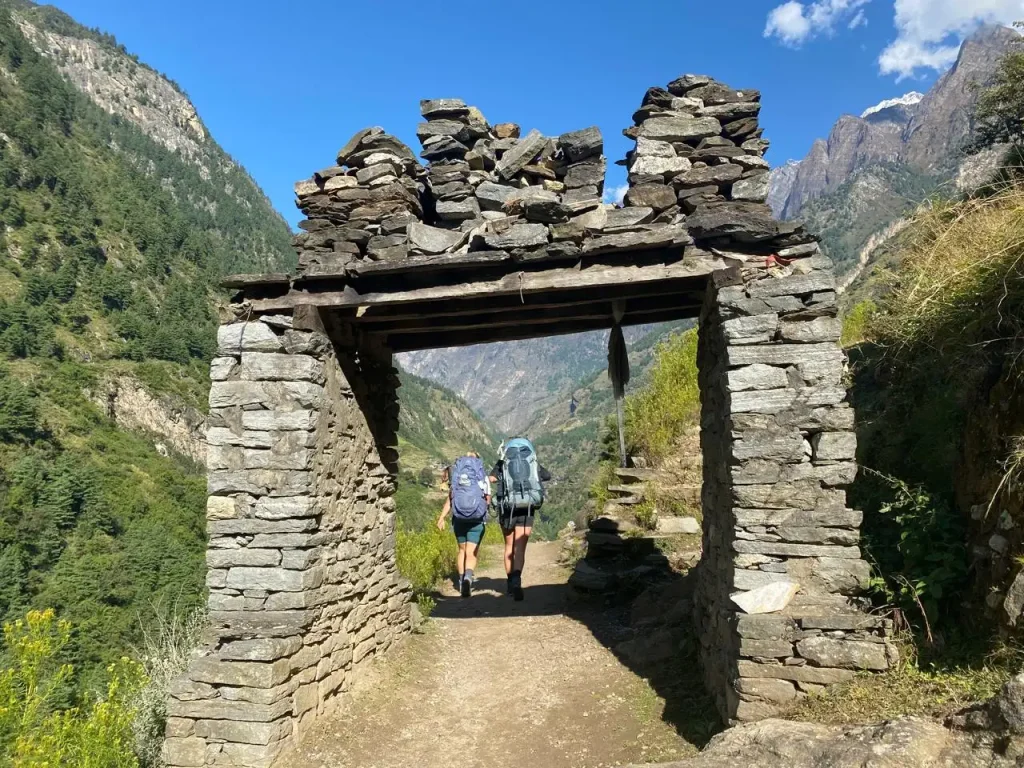
Once trekkers get a taste of Manaslu, a good number of them come back to us asking how to make the trip even bigger. If you’ve got the time and the appetite for more, here are the extensions and side trips we recommend most often.
Tsum Valley Trek Extension — Explore a Hidden Buddhist Valley
If one sacred valley wasn’t enough, Tsum Valley is the add-on we point most culturally curious trekkers toward. It’s one of Nepal’s hidden pilgrimage routes, tucked away from the main circuit, and it delivers quiet trails, striking landscapes, centuries-old Buddhist monasteries, and genuine time spent among the Tsumba community. Branching off from the main route after Philim, this extension typically adds 7 to 9 days to your itinerary, depending on how you want to pace it. If you want a deeper feel for what makes this valley so special, we’ve written more about it in the beauty of Manaslu Tsum Valley trekking.
Manaslu to Annapurna Circuit Connection
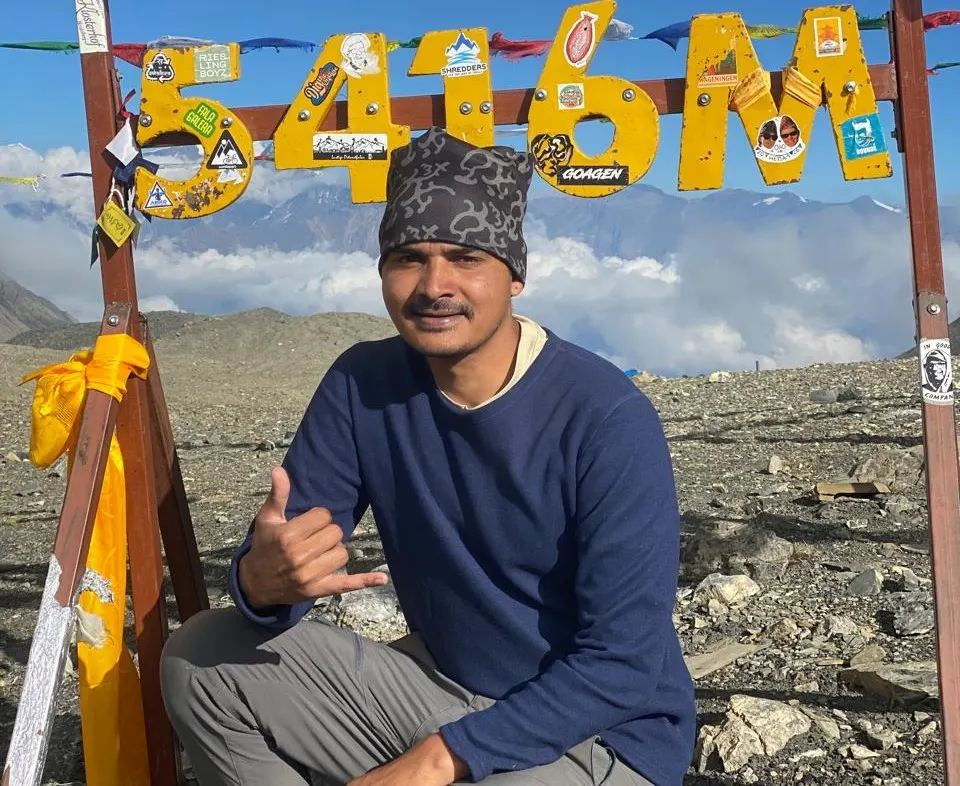
For trekkers who can’t decide between Manaslu and Annapurna, here’s our answer: don’t choose. This connection lets you finish the Manaslu Circuit at Dharapani and keep walking straight into Annapurna territory, passing through Chame and Pisang before tackling Thorong La Pass. It’s genuinely the best of both worlds — you get Manaslu’s remote, untouched wilderness followed by Annapurna’s own diverse landscapes and warm ethnic communities, all in one continuous journey. As a bonus for the achievement-minded, this route lets you cross both of Nepal’s iconic high passes on a single trip: Larkya La (5,160m) and Thorong La (5,416m).
Side Trips to Pungyen Gompa and Birendra Lake
Even without extending your trip by days, there are a couple of side trips along the main route we’d genuinely encourage you not to skip.
Pungyen Gompa, sitting at 4,700 meters, is a respected monastery set right against the Manaslu glacier — and it happens to line up perfectly with your acclimatization day. From Samagaon, it’s a manageable local excursion up to the gompa, rewarding you with sweeping views and a peaceful, almost otherworldly atmosphere. Trekkers occasionally catch monks in quiet meditation up there — the kind of moment that’s easy to remember long after the trek ends.
Birendra Lake, at 3,691 meters near Samagaon, is the other side trip we always suggest. This glacial lake sits right at the foot of the Manaslu Glacier, and its turquoise water mirrors the surrounding peaks beautifully — it’s one of the best photo stops on the entire circuit. Beyond the scenery, the short hike out there also doubles as useful acclimatization, and it’s a genuinely nice spot to simply sit, rest, and take in where you are.
Why Manaslu Is a Great Alternative to Everest and Annapurna
Everest Base Camp and the Annapurna Circuit have earned their reputations for good reason — but that reputation comes with a cost: crowds. Both trails get busy during peak season, and both have grown considerably more commercialized over the years. If what you’re after is a genuinely remote, off-the-radar experience in Nepal, we’ll be honest with you: those two classics aren’t always going to deliver it the way Manaslu can. Here’s why we point so many of our trekkers this way instead.
Fewer Crowds
This is usually the first thing trekkers notice once they’re on the Manaslu trail. Because the region requires a special restricted-area permit, trekker numbers stay naturally capped — which means no bottlenecks, no queuing behind long lines of hikers at narrow trail sections, and far more room to actually connect with the landscape around you. Compare that to Everest or Annapurna during high season, where popular stretches can feel more like a procession than a solitary trek. If solitude is part of why you’re coming to the Himalayas in the first place, Manaslu protects that experience far better.
A Genuinely Remote Trail
Manaslu’s remoteness isn’t just about fewer people — it’s baked into the trail itself. You’ll pass through traditional villages that have stayed largely under the radar, walk rugged, narrow gorges, and get a much rawer sense of wilderness throughout. Everest and Annapurna, by contrast, have developed considerably to support their trekker volumes: stone-paved paths, frequent teahouses, bakeries, and in many spots, even reliable Wi-Fi. None of that makes those treks any less worthwhile, but it does mean the feeling of remoteness has thinned out over the years — something Manaslu still holds onto.
A More Authentic Cultural Experience
Culturally, Manaslu offers something increasingly rare on Nepal’s more popular routes. Villages like Samagaon, Lho, and Sho carry deep Tibetan Buddhist influence that still feels lived-in rather than performed, and the Tsum Valley extension takes that even further, preserving a way of Himalayan life that’s changed remarkably little over generations. To be clear, Everest and Annapurna are culturally rich too — that’s never been in question. But heavy tourism has nudged many of their villages toward catering to international expectations, simply because of how many trekkers pass through each season. Manaslu, for now, still feels like it belongs to the people who live there first.
Wilder, More Varied Landscapes
Terrain-wise, Manaslu simply throws more at you than Everest or Annapurna do. In a single trek, you’ll move through lush subtropical forest, alongside rushing rivers, into high-altitude desert, and eventually onto snow and glacier — the scenery shifts dramatically almost day by day, always with a snow-capped peak somewhere in the frame. Everest and Annapurna are icons for good reason, but by comparison, their terrain can feel a little more repetitive over the length of the trek. Manaslu rarely lets the view get old.
Eco-Friendly and Sustainable Trekking
Because Manaslu hasn’t been commercialized to the same degree as its more famous neighbors, it’s held onto both its natural beauty and its cultural integrity far better. In practical terms, that also means less plastic waste along the trail and a lighter overall footprint — something we take seriously, and something we think matters more every year as trekking in Nepal grows.
Final Thoughts
The Manaslu Circuit is one of those rare treks that still delivers exactly what most people come to Nepal hoping to find: remoteness, rich culture, dramatic and varied landscapes, and an experience that feels earned rather than packaged. Yes, it comes with real challenges — the altitude, the length, the terrain — but that’s exactly what makes reaching Larkya La Pass, and finishing the circuit, feel like such a genuine accomplishment. Go in with the right preparation, and this guide should leave you with no surprises standing between you and that summit moment.
If you’re ready to make it happen, we’d love to be the ones to get you there. At Trekking Planner Nepal, our experienced guides and strong, reliable porters have walked this route more times than we can count, and we’re just as invested in your trek going smoothly as you are. Let us handle the permits, the logistics, and the trail knowledge — you focus on soaking in the mountains, the culture, and the people that make this region so special.
The Manaslu region is waiting. Let’s start planning your trek.
Frequently Asked Questions
How long is the Manaslu Circuit Trek?
Most of our itineraries run 14 to 20 days, door to door, including a couple of built-in acclimatization days. The exact length really comes down to your pace, whether you add Tsum Valley, and if you’re linking onward to Annapurna.
How many kilometers is the Manaslu Circuit Trek?
You’re looking at roughly 150 to 180 kilometers total, depending on your exact route and any side trips or extensions you tack on. It’s not the distance that makes this trek tough, though — it’s the altitude and terrain along the way.
What is the maximum altitude of the Manaslu Circuit Trek?
Larkya La Pass is the high point at 5,160 meters. It’s the day every trekker on this route builds toward, and also the day we plan around most carefully for weather and acclimatization.
Is the Manaslu Circuit Trek safe?
Yes, it’s a safe trek when it’s done properly — with a licensed guide, sensible acclimatization, and a bit of common sense around altitude symptoms. We build our itineraries specifically to manage the main risks, and our guides are trained to spot early signs of altitude sickness before they become serious.
Is previous trekking experience required?
Not strictly, but we won’t pretend this is a beginner-friendly trek either. If you’re reasonably fit and can commit to a few months of preparation beforehand, you don’t need prior Himalayan experience — but if this would be your very first multi-day trek anywhere, we’d usually suggest cutting your teeth on something like Annapurna first.
What is the best way to physically prepare for this trek?
Start a few months out with a mix of cardio, leg-strengthening work, and long hikes or stair sessions with a loaded pack. The goal isn’t to be an athlete — it’s to arrive with the stamina to enjoy your days on the trail instead of just enduring them.
Do I need travel insurance for the Manaslu Circuit?
Yes, and we consider this non-negotiable. Make sure your policy specifically covers trekking at high altitude (above 5,000 meters) and includes helicopter evacuation — standard travel insurance often excludes both, and this is exactly the kind of remote region where evacuation coverage actually matters.
Is there Wi-Fi or mobile network along the trail?
Coverage is patchy at best and disappears completely in some stretches. A few teahouses offer paid Wi-Fi, and local SIM cards can pick up occasional signal in bigger villages, but don’t count on staying constantly connected. We’d actually call that one of the trek’s quiet perks.
Can I charge my phone and camera batteries on the trek?
Most teahouses offer charging for a small fee, usually higher the further you go. We always recommend carrying a power bank or two as backup, since availability and reliability can vary from village to village.
What’s the cash and ATM situation on the Manaslu Circuit?
There are no ATMs once you’re on the trail, and card payments are essentially non-existent. Carry all the Nepali rupees you’ll need in cash before you set off — we can advise on a sensible amount based on your itinerary and spending habits.
Do I need a visa to trek in Nepal?
Yes, most nationalities can get a visa on arrival at Kathmandu airport, or apply in advance depending on your country. This is separate from your trekking permits, so make sure both are sorted before you fly.
Can the itinerary be customized?
Absolutely — we build a lot of our trips around what trekkers actually want, whether that’s more acclimatization days, adding Tsum Valley, connecting through to Annapurna, or simply adjusting the pace. Just tell us what you’re after and we’ll shape a plan around it
What is the typical group size on a Manaslu trek?
We generally keep groups small and personal, and we’re also happy to arrange private treks for pairs or families who’d rather not join a larger group. Given the mandatory minimum of two trekkers, even a small private booking works fine.
Will I get altitude sickness on this trek?
There’s no guarantee either way — altitude sickness doesn’t discriminate by fitness level. What matters is ascending gradually, staying hydrated, and listening to your body (and your guide) if symptoms show up. Our itineraries are built with acclimatization in mind precisely to keep this risk as low as possible.
When should I book my Manaslu Circuit Trek?
If you’re aiming for spring or autumn, we’d suggest booking at least a couple of months out — permits, guides, and teahouse space all get tighter as peak season approaches. The earlier you lock in your dates, the more flexibility you’ll have to shape the trip exactly how you want it.
Explore Our Most Popular Manaslu Trek Packages
👉 Manaslu Tsum Valley Trek – 13 Days
👉 Manaslu Circuit Trek – 12 Days
Need Help? / Call Us
+977-9845548583 or Chat with us on WhatsApp