
How to Immerse Yourself in the Authentic Culture of the Manaslu Circuit
After guiding trekkers through the Manaslu region for years, I still tell people the same thing: this is one of the last places in Nepal where you feel like a guest in someone’s real life, not a visitor in a tourist attraction. The Manaslu Circuit Trek sits in a valley that only opened to foreign trekkers in the early 1990s, and that late start is exactly why the culture here feels so intact. While the Everest and Annapurna trails have grown into well-worn tourist corridors over the decades, Manaslu still moves at its own pace, shaped by the same customs its villages have followed for generations.
Staying in Traditional Local Teahouses Enhances the Manaslu Experience
The teahouses along this route are family homes first and lodges second. When you sit by the kitchen fire with your host family, share a plate of dal bhat, or ask about their winter routine once the passes close, you get a version of Nepal that guidebooks can’t hand you. Learning a simple “Namaste” goes a long way, but staying an extra hour after dinner to talk with your hosts is what actually opens doors.
The Villages That Give the Manaslu Circuit Its Unique Cultural Identity
Walking north from Jagat toward Sama Gaun, each settlement has its own personality:
- Jagat and Deng – lower-elevation villages with a mix of Hindu and Buddhist influence
- Namrung – a natural transition point where Tibetan Buddhist culture becomes more visible
- Sama Gaun – the cultural heart of the trek, with old stone houses and centuries-old gompas set beneath Manaslu itself
Because the region borders Tibet, Tibetan Buddhism shapes daily life here more than in most other Nepal trekking regions. You’ll walk past mani walls, spinning prayer wheels, and strings of prayer flags for most of the route, particularly from Namrung onward.
Planning Your Manaslu Trek Around Local Festivals and Celebrations
If your schedule allows it, plan around Lhosar (the Tibetan New Year, usually falling in February or March) or Dumje, a summer festival built around community purification and bonding. Neither is staged for outsiders. You’re witnessing genuine ritual, dance, and devotion, and if you’re respectful, you’ll likely be welcomed to watch.
How the Cultural Experience of Manaslu Differs From Everest and Annapurna
Having guided on multiple routes, I’d put it this way: on Manaslu, you’re not observing culture from the trail, you’re walking through people’s daily lives. The pace is slower, the villages are smaller, and the encounters feel unscripted. That’s the trade-off for the region’s restricted-area permit requirements and lower foot traffic, and in my experience, it’s a trade-off worth making.
My advice: slow down. Try tsampa or yak butter tea when it’s offered, ask questions, and let the trek be about the people as much as the mountains.
What are the Essential Ways for Trekkers to Respect Local Customs and Traditions
Respect here isn’t complicated, but it does take some awareness:
- Dress modestly – cover shoulders and legs, especially near monasteries and in villages
- Ask before photographing people, ceremonies, or monastery interiors
- Walk clockwise around mani walls, chortens, and prayer wheels — always spin wheels clockwise too
- Greet locals with “Namaste” or the Tibetan “Tashi Delek”
- Follow your guide’s lead on etiquette; if invited for tea or to observe a family prayer, accept quietly and follow their cues
A quiet, observant presence usually earns more trust than an enthusiastic one. Small gestures like these matter more to your experience — and to the people hosting you — than any gear on your packing list.
Which Festivals and Cultural Celebrations Take Place Along the Manaslu Circuit?
Yes, and timing your trek around one can transform the experience.
Lhosar (Tibetan New Year, February–March depending on the lunar calendar) brings villages to life with music, dance, and monastery ceremonies. Dumje, celebrated in summer in select villages, centers on purification rituals and communal dancing.
Both are living traditions, not tourist performances. Even outside festival dates, spiritual life continues daily in Sama Gaun and Lho, where the monasteries remain the center of village activity year-round.
If festival timing matters to your trip, check local lunar calendars a few months ahead, since exact dates shift annually — a detail worth confirming with a local guide or agency before booking flights.
What Languages and Dialects Are Spoken Throughout the Manaslu Region?
Language changes as you gain elevation on the Manaslu Circuit Trek, and that shift itself tells you something about how this region developed. Lower down, Nepali is the language you’ll hear most. But once you climb toward Samdo and Sama Gaun, Tibetan dialects take over, a direct result of the valley’s centuries-old trade and cultural ties across the Tibet border.
In some of the more isolated pockets of the Tsum Valley and around Larke, you’ll also come across Tsumke or Larke Bhotia, dialects that exist almost entirely through oral tradition. Few written records exist, so hearing them spoken is genuinely hearing living history.
A practical note from years of guiding here: many elders in these upper villages speak limited Nepali and little to no English. This is one of the clearest reasons a knowledgeable guide matters on this route — not just for navigation, but for real communication.
A few words go a long way:
- “Namaste” — Nepali greeting, hello or goodbye
- “Tashi Delek” — Tibetan greeting, especially useful in higher villages
You won’t struggle to get by with English in the teahouses, since most guides and lodge owners manage basic conversational English. But even a clumsy attempt at the local language tends to earn a smile and open up warmer exchanges with your hosts.
The Cultural and Spiritual Importance of Monasteries in Manaslu Villages
Nearly every village on the Manaslu Circuit Trek has a monastery, or gompa, and it’s rarely just a place for prayer. These buildings function as schools, meeting halls, and the social anchor of the community all at once.
In Lho and Sama Gaun, the monasteries are active daily. Expect to hear chanting drift across the village at dawn, see children heading to monastic classes, and notice murals and carved woodwork that, in some cases, have survived for centuries.
Visiting etiquette:
- Remove your shoes before entering
- Move quietly and avoid disrupting active prayer
- Ask before photographing the interior or monks
- If invited to sit in on a blessing, take the opportunity — it’s a rare window into local spiritual life
These aren’t museum pieces kept for visitors. They’re working religious institutions that also host the region’s seasonal festivals. Spend even twenty minutes at a monastery in Lho or Sama Gaun and you’ll understand why locals treat the surrounding peaks as sacred ground, not just scenery.
| Manaslu Circuit Trek – 12 Days Trekking in Nepal From To US$ 675 Save US$ 290 |  View Trip |
A Glimpse Into Daily Life in a Traditional Himalayan Village
Village life along the Manaslu Circuit runs on a rhythm shaped by altitude, farming, and faith.
Morning: Families are up early tending yaks, goats, or dzopkyos before heading to terraced fields to work potatoes, barley, or buckwheat — whatever the short mountain growing season allows. Breakfast is usually tea with tsampa or rice porridge, cooked over a wood or yak-dung stove.
Daytime: Elders often spin prayer wheels or stop by the local gompa for morning prayers while children head off to school or monastic classes. The rest of the village turns to shared work — building, herding, festival preparation — and by afternoon, teahouses fill with trekkers, providing many families their main source of income.
Evening: Meals center around dal bhat or noodle soup, eaten together by the fire as temperatures drop fast after sunset. Once the stars come out over the ridgelines, the village settles into quiet.
It’s a slower pace of life than most trekkers are used to, and honestly, that’s part of what makes staying in these villages worthwhile.
Traditional Dishes and Local Foods to Experience on the Manaslu Trek
Food on this trek is simple, filling, and built for high altitude. Here’s what to expect on the menu:
- Dal bhat — steamed rice, lentil soup, seasonal vegetables, usually with a free second helping. This is the trekker’s staple meal across Nepal, and for good reason: it’s balanced fuel for long trekking days.
- Tsampa — roasted barley flour mixed with tea or water, a Tibetan staple that shows up often at higher elevations
- Thukpa — noodle soup with vegetables or meat, a solid choice after a cold day on the trail
- Tibetan bread or chapati — common breakfast option, served with jam or honey
- Yak butter tea — salty, fatty, and something of an acquired taste, but genuinely useful for staying warm and hydrated at altitude
- Momos — dumplings, found in villages with enough foot traffic to support the extra prep
- Potatoes with local cheese and seasonal foraged greens, especially higher up where meat becomes scarce
Note that meals skew vegetarian the higher you climb, since meat is harder to source and store safely above certain elevations. Eating what’s offered locally, rather than sticking only to trekker menus, is one of the easiest ways to support village economies directly.
How Communities in the Manaslu Region Make a Living and Sustain Their Traditions
Subsistence farming and livestock form the backbone of life here. Villagers grow potatoes, barley, millet, and buckwheat on terraced fields, while yaks, goats, and sheep supply milk, meat, and wool.
Trade and income sources include:
- Traditional cross-border trade with Tibet — salt, wool, and grain, following routes that predate modern tourism by generations
- Teahouse ownership and trekking-related services (guiding, portering)
- Seasonal income from the growing eco-tourism sector
That tourism income increasingly funds education, healthcare, and small infrastructure upgrades — a shift I’ve watched firsthand over the years I’ve guided this route. Homes are typically built from stone with slate roofs, heated and cooked in using wood or yak-dung stoves, and families lean heavily on community cooperation for major work like construction and harvest.
Monasteries remain central to this system too, offering both moral guidance and, for many families, a path for young boys to become monks. What’s notable is how the region has folded tourism into its existing way of life rather than being reshaped by it — the culture leads, and the income from trekking simply supports it.
How Visitors Can Respectfully Engage With Local Ceremonies and Religious Practices
Yes, though it’s worth setting expectations correctly: spontaneous participation is rare, but respectful involvement happens more often than most trekkers expect, especially when you’re traveling with a guide who has real relationships in the villages along the Manaslu Circuit Trek.
What you might encounter:
- Morning prayers at a monastery
- Butter lamp offerings
- Puja (blessing) ceremonies
- Occasionally, funeral rites
These are genuine spiritual practices involving chanting, incense, and symbolic offerings — not performances staged for visitors. If you’re simply observing, the rule is straightforward: dress modestly, stay quiet, and let your guide signal what’s appropriate.
During festivals like Lhosar, it’s not unusual for villagers to invite trekkers into a communal dance or meal. Treat that as the honor it is. Even sitting with elders and listening to chanting, without saying much at all, tends to leave a stronger impression than any photo.
On photography: it’s generally fine, but ask first — particularly around religious rites. The goal isn’t to document the moment, it’s to be present in it.
Is Cultural Tourism in Remote Himalayan Communities Ethically Responsible?
This question comes up often, and I think it deserves an honest answer rather than a marketing one. Tourism genuinely helps this region economically, but done carelessly, it can also erode the very culture people come to experience.
A few practical ways to trek responsibly:
- Choose local lodges and licensed guides/porters so your money stays in the community rather than flowing to outside operators
- Don’t hand out sweets or cash to children — it fuels begging over school attendance, a pattern I’ve seen damage communities over time
- Follow Leave No Trace principles: pack out trash, carry a refillable water bottle, and be mindful around wildlife and sacred sites
- Dress and behave modestly, and always ask before photographing people or ceremonies
If you want to go further, some trekkers choose to donate to grassroots organizations working on education, healthcare, or conservation in the Manaslu region — a meaningful way to give back beyond the trekking permit fees.
Done thoughtfully, the Manaslu Circuit Trek can genuinely benefit both visitor and host. The measure of a good trek isn’t only what you experienced — it’s what condition you leave the trail and the community in.
What Traditional Clothing Reveals About the Culture of the Manaslu Region
Traditional dress here does more than fight the cold — it tells you who someone is. Many older villagers, particularly in Tibetan-influenced areas like Samdo and Sama Gaun, still wear the chuba, a long woolen robe tied at the waist with a sash, built specifically for high-altitude mountain life.
What you’ll typically see:
- Handwoven wool or yak-hair layers, often made by the wearer’s own family
- Pangden — striped woolen aprons worn by women, common during ceremonies and festivals
- Beaded necklaces and metal ornaments, where color and pattern can signal marital status or village origin
- Sturdy leather or heavy-fabric footwear suited to rough trail conditions
Festival days bring out the finer details — embroidered jackets, bright sashes, occasionally even hand-painted boots.
For trekkers, dressing modestly isn’t just etiquette, it’s a quiet way of showing you understand where you are. Paying attention to local attire is also one of the simplest ways to read a village’s identity at a glance.
Exploring the Religious and Spiritual Traditions of Manaslu Communities
Tibetan Buddhism shapes daily life throughout the Manaslu region, layered with elements of Bon, an older shamanistic tradition that predates Buddhism’s arrival in the Himalayas. Karma, compassion, and a close relationship with nature run through nearly everything villagers do.
You’ll see the physical markers of this everywhere: monasteries, prayer wheels, and mani walls carved with sacred mantras line the trail from Namrung through Sama Gaun and beyond. These aren’t decorative — locals genuinely start their mornings spinning prayer wheels or walking a kora, a circumambulation around a sacred site.
Nature itself carries spiritual weight. Many believe mountains, rivers, and forests hold protective spirits, and rituals are performed before major life events — harvest, childbirth, long journeys — to keep those forces in balance.
Monks serve as spiritual guides, and it remains common for families to send a son to the monastery. Festivals, in this context, aren’t purely social — they’re understood as chances to clear karma and restore balance within the community.
Understanding this spiritual layer changes how you experience the trek. You’re not just walking past scenery — you’re moving through a landscape that locals consider genuinely sacred.
The Role and Contributions of Women in Traditional Manaslu Communities
Women hold the region together in ways that aren’t always visible to passing trekkers. Between farming, childcare, cooking, firewood collection, and animal care, women manage most of the daily operational load in Manaslu’s villages, alongside preserving cultural knowledge that gets passed down through generations.
Areas where women’s work is most visible:
- Field labor and wool spinning
- Handweaving textiles, rugs, and garments used in both daily life and ceremonies
- Maintaining household shrines and participating in community rituals
- Leading food preparation and organizing festival gatherings
Religious life runs through much of this too — women are frequent monastery visitors and often take active roles in community rituals, not just supporting ones.
Education and healthcare access have improved gradually in recent years, giving more women in the region a path to schooling or a voice in local decisions, though the remoteness of villages like Samdo and Sama Gaun still limits how far these gains reach.
If there’s one thing I’d tell trekkers passing through: the warmth and organization you feel in these villages is, in large part, the result of the women running them. A little humility and genuine interest in their work goes a long way toward an honest cultural exchange.
Traditional Crafts, Textiles, and Handicrafts of the Manaslu Region
Craft traditions along the Manaslu Circuit Trek aren’t produced for gift shops — they’re made for use, which is exactly what makes them worth noticing. Weaving, woodcarving, and metalwork here all carry practical and spiritual purpose, passed down through families rather than taught in workshops.
Textiles: Women weave wool into rugs, blankets, and clothing on manual looms, often working in geometric patterns with strong, deliberate color choices. The pangden, a striped apron worn by married women, is a good example — it’s both everyday clothing and a marker of social status.
Woodcarving: Local artisans carve prayer wheels, mani stones, window frames, and monastic ornamentation, frequently featuring Buddhist symbols like the lotus, vajra, or endless knot. You’ll spot this carving work on homes and gompas throughout villages like Lho and Sama Gaun.
Metalwork: In villages along old trade routes, artisans produce butter lamps, ritual bells, and incense holders used in daily offerings and festival ceremonies.
Very little of this is made with tourists in mind, which is part of the appeal. If you do want to purchase something, ask about its origin and make sure it’s genuinely locally made rather than imported — it makes a real difference to the artisans who depend on that income.
Sacred Mountains, Rivers, Forests, and Other Natural Sites Along the Manaslu Trail
Yes, and this is something I always point out to first-time trekkers: in this region, the landscape itself is considered sacred, not just the buildings.
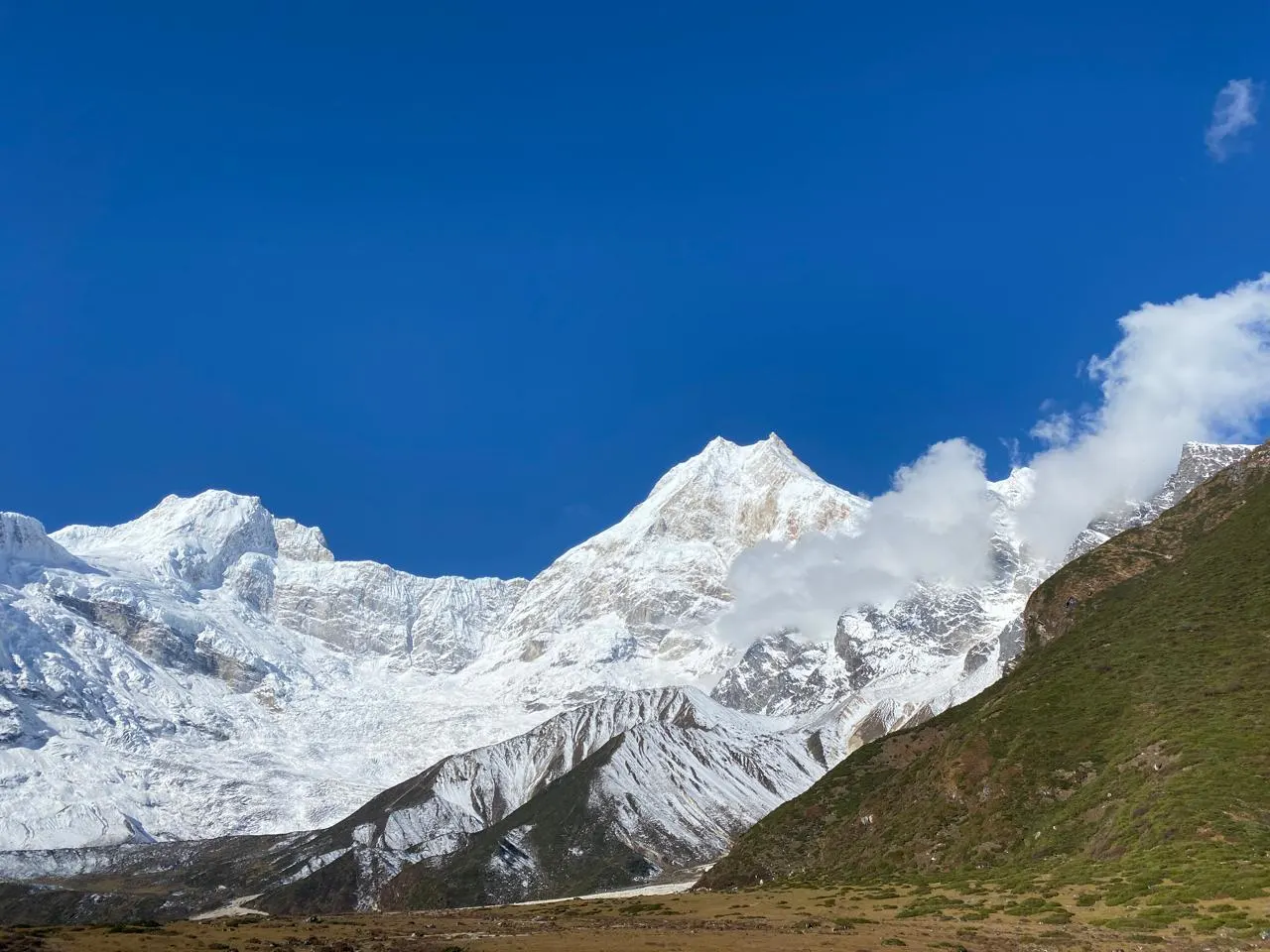
Manaslu (8,163m) is often called the “Mountain of the Spirit” by locals, and that reverence shapes how communities interact with the land around it. Birendra Tal, the glacial lake near Sama Gaun, is another site of real spiritual weight — locals visit for blessings and purification, and monks sometimes hold ceremonies there tied to the lunar calendar.
Beyond the well-known landmarks, you’ll find:
- Forests and cliffs believed to house protector spirits
- Caves linked to meditating yogis and saints from local legend
- Small stone offerings and prayer flags marking these sacred points
The etiquette is simple: keep noise down, don’t litter, and don’t enter without checking whether it’s appropriate. These aren’t scenic backdrops — for the people who live here, they’re active spiritual sites, and treating them that way is part of trekking respectfully through Manaslu.
Growing Up and Childhood Life in Remote Manaslu Villages
Childhood here revolves around family, responsibility, and community from a young age. Formal schooling exists but isn’t always consistent — weather, distance, and household economics all affect attendance, particularly in the more remote villages above Namrung.
Some families send children to monasteries instead, where they learn scripture, ritual, and Buddhist philosophy alongside a more conventional education. Others grow up learning by doing — herding animals, gathering firewood, helping with the harvest — practical skills picked up through daily participation rather than classroom instruction.
Despite the workload, childhood still looks like childhood in places: games improvised with sticks and stones, younger siblings looked after by older ones, kids moving freely through village paths. Many children end up speaking three languages by necessity — a local dialect, Nepali, and some basic English if their village sits along a teahouse route frequented by trekkers.
Technology remains limited, especially in higher villages, though education and healthcare access have been slowly improving. If you interact with local children on the trail, a friendly but low-key approach tends to be well received — they’re curious about visitors, but they’re not there for photos.
Tsum Valley Explained: Its Distinct Culture, Traditions, and Heritage
The Tsum Valley is a side trek off the main Manaslu Circuit route, and in my opinion, one of the most underrated cultural additions a trekker can make to their itinerary. Nicknamed the “Hidden Valley of Happiness,” Tsum only opened to foreign trekkers in 2008, which means its Tibetan Buddhist traditions have had far less outside contact than most of Nepal’s trekking regions.
Villages worth noting:
- Chhokang Paro and Nile — traditional farming communities with strong monastic ties
- Mu Gompa — one of the valley’s key monasteries
- Rachen Nunnery — notable for its community of female monastics, a detail that says a lot about the role of women in Tsum’s spiritual life
Tsum also carries a strong association with the Buddhist saint Milarepa, believed to have meditated in caves throughout the valley — sites still visited by pilgrims today.
Compared to the main Manaslu Circuit Trek, Tsum Valley moves at an even slower, quieter pace. If your goal is deep cultural immersion over mileage, adding Tsum to your itinerary is worth the extra days.
How Manaslu Communities Preserve Their Cultural Heritage in Modern Times
Cultural preservation in Manaslu isn’t passive — it’s something communities actively work at, even as tourism and modernization slowly creep into the region.
How it happens in practice:
- Elders teach songs, stories, rituals, and farming knowledge directly to younger generations
- Monasteries continue educating children in Buddhist philosophy, keeping spiritual practice alive alongside cultural identity
- Festivals like Lhosar and Dumje are still celebrated in full, reinforcing community bonds year after year
- Local guides increasingly act as informal cultural educators for trekkers, sharing traditions as a point of pride, not just income
There’s also a generational shift worth mentioning. Younger people who leave for education in Kathmandu or beyond often come back with a renewed appreciation for where they’re from, and many are the ones building eco-tourism initiatives, cultural homestays, and community projects that blend tradition with modern opportunity.
The approach here isn’t to resist change outright — it’s to adapt on their own terms, which, from what I’ve seen guiding in this region for years, is exactly what’s kept Manaslu’s culture as intact as it is today.
Why Prayer Flags and Mani Walls Are Important to Himalayan Culture
These are two symbols you’ll notice within your first hour on the trail, and understanding what they mean changes how you walk past them for the rest of the Manaslu Circuit Trek.
Prayer flags come in five colors — blue, white, red, green, and yellow — each representing an element. They’re printed with mantras and sacred images, and the belief is simple but powerful: as wind moves the fabric, it carries those prayers outward, benefiting everyone, not just the person who hung them. You’ll see them strung across mountain passes, ridgelines, and rooftops throughout the route — a kind of ongoing offering to the sky.
Mani walls are different — low stone structures carved with the mantra “Om Mani Padme Hum,” positioned along the trail or near village entrances. There’s one firm rule here: always pass on the left, walking clockwise. Locals will often pause at these walls to spin a nearby prayer wheel or recite a mantra as they go by.
Trail etiquette to remember:
- Pass mani walls and chortens on your left
- Spin prayer wheels clockwise, never counterclockwise
- Avoid touching or disturbing prayer flags
Respecting these small rules costs nothing and signals real awareness of where you are — small gestures, but ones that locals notice.
How Seasonal Weather and Climate Shape Life and Traditions in Manaslu
Weather doesn’t just affect trekking seasons here — it’s shaped the entire way villages function. Winters in the higher settlements are long and severe, which means months of advance preparation: storing food, firewood, and animal fodder before the cold sets in fully.
This weather-driven rhythm shows up in several ways:
- Festivals and gatherings cluster around the post-harvest months, when there is both food surplus and free time
- Winter becomes a quieter, indoor season, spent close to family or in monastic retreat
- Home construction uses thick stone walls, heavy wooden beams, and insulation from yak dung or clay, with flat, stone-weighted roofs designed to hold against wind
- Communal fire pits become the social center of village life during the cold months
Even spiritual interpretation ties back to weather — unusual storms or disturbances are sometimes read as messages from local deities, prompting protective rituals. And practically speaking, travel and trade slow dramatically during monsoon and deep winter, which is exactly why most trekkers plan their Manaslu Circuit Trek for spring (March–May) or autumn (September–November), when trails and passes are most reliably accessible.
Understanding the Traditional Culture of Hospitality in the Manaslu Region
Hospitality here isn’t performative — it comes from a genuine sense of community obligation and karma, and it shows up even in villages with very little to spare.
What a warm welcome typically looks like:
- A smile, a nod, and often a cup of salted yak butter tea or herbal brew
- An invitation inside to share a simple meal — dal bhat or buckwheat pancakes are common
- A seat by the fireplace, which functions as the true heart of most homes
- At monasteries, sometimes a red protection cord tied on after a short blessing ritual
Language barriers rarely get in the way of this kind of warmth — gestures carry the message clearly enough.
A few things that go a long way as a guest:
- Remove your shoes before entering a home
- Say “dhanyabad” (thank you in Nepali) sincerely
- Accept what is offered, even if it is modest
In my experience guiding here, this generosity isn’t about hospitality-as-business the way it can feel on more commercial routes. It reflects genuine spiritual values around giving and human connection.
Traditional Customs Surrounding Births, Marriages, and Other Major Life Events
Life’s major moments here are community events first, personal ones second, all shaped by Tibetan Buddhist tradition.
Births: A lama is often invited soon after birth to perform naming ceremonies and blessings. Families may light butter lamps and host a modest gathering, with gifts usually limited to food or homemade clothing.
Marriages: Many are still arranged, though love marriages are becoming more common, especially among younger generations. Weddings typically stretch across multiple days, involving traditional songs and dances, the exchange of ceremonial scarves called khata, and monastery blessings meant to bring harmony to the union.
Funerals: Solemn but deeply spiritual, with cremation or sky burial practiced depending on local belief and geography. Monks chant to guide the departed soul, and mourning rituals can extend for days or weeks.
What stands out across all three is how communal these moments are — nobody in a Manaslu village experiences birth, marriage, or death in isolation. The whole community shows up.
How Traditional Himalayan Communities Understand Time and Daily Life
This is one of the harder adjustments for first-time trekkers, and honestly, one of the more rewarding ones. Village life here doesn’t run on clocks — it runs on sunrise, sunset, weather, and the lunar calendar.
Tasks get scheduled around natural markers: “after the sun warms the roof,” or “when the goats come back.” It’s not vague — it’s just a different logic than the scheduled, hour-by-hour world most trekkers are used to.
Religious life follows its own calendar too:
- Monastic schedules track lunar cycles
- Festivals and rituals are timed using astrological calculations
- Specific days are set aside for offerings, fasting, or visits to sacred sites
If you’re trekking the Manaslu Circuit, my honest advice is to loosen your itinerary where you can. The trekkers who get the most out of this region are usually the ones who stop checking the time and start paying attention to the rhythm around them instead — it’s a small mental shift, but it changes the entire trip.
The Importance of Folk Songs, Stories, and Oral History in Manaslu Culture
In a region where written records are limited, songs and stories do the work that books might do elsewhere. Along the Manaslu Circuit Trek, oral tradition is how history, values, and identity get passed from one generation to the next.
Elders sing folk songs about love, harvest, migration, and spiritual teaching, often while working — weaving wool, tending fields, or during festival gatherings. The melodies tend to be repetitive and rhythmic by design, which makes them easy to memorize and pass along.
Buddhist chanting is a daily fixture, not an occasional one. Monks and villagers alike recite mantras during prayer, walking meditation, or offerings at sacred sites, believed to purify the mind and send blessings outward.
Then there are the stories — tales of local deities, saints like Milarepa, and legendary acts of heroism, usually told to children at night or shared at community gatherings. These carry moral lessons as much as entertainment value.
If your guide or a village elder offers to share a song or story on the trail, take the time to listen. It’s a small moment, but it connects you to something older and deeper than the trek itself.
| Manaslu Tsum Valley Trek – 13 Days Trekking in Nepal From To US$ 815 Save US$ 310 | View Trip |
How Local Communities Perceive Foreign Trekkers and the Growth of Tourism
Most communities along the Manaslu Circuit welcome trekkers, and for good reason — tourism has brought real, tangible benefits: income, employment, and infrastructure improvements like schools and clinics. Many families now depend directly on teahouse income, guiding work, or portering.
That said, there’s real caution here too. Locals have watched what happened to more commercialized routes like Everest and Annapurna, and there’s a clear intention to avoid the same fate. This is part of why the Manaslu Circuit requires restricted-area permits and why trekking with a licensed guide is mandatory — it’s not just bureaucracy, it’s a deliberate choice to manage tourism’s pace and impact.
What earns genuine warmth from locals:
- Learning a few words of Nepali or Tibetan
- Following basic customs (dress, greetings, monastery etiquette)
- Showing real curiosity rather than treating the village as a photo backdrop
What tends to be poorly received:
- Loud or disruptive behavior
- Cultural carelessness (photographing without asking, ignoring dress norms)
- Littering or disregard for the environment
In my experience, villagers see respectful trekkers as guests, not transactions. Tourism here is still, at its core, about sharing a way of life — and that only works if visitors treat it that way too.
How Remote Monasteries Are Preserved, Managed, and Financially Supported
Keeping a monastery running in a place like Sama Gaun or Lho isn’t simple — there’s no municipal budget, no easy supply chain. It happens through a mix of community labor, donations, and genuine devotion.
Where the support comes from:
- Villagers contribute labor directly — repainting murals, repairing prayer wheels, clearing paths
- Families donate food, butter, grain, or small amounts of money, particularly during festivals
- Trekkers and foreign visitors sometimes sponsor novice monks’ education or contribute to preserving ancient texts and sacred art
- Larger monasteries occasionally receive support from Buddhist networks abroad
- Festival offerings help fund daily rituals and general upkeep
These aren’t just historic buildings being preserved for their own sake — they’re active spiritual centers that entire villages organize around. If you want to support the culture you’re walking through, a modest donation or lighting a butter lamp at a monastery is a meaningful, low-key way to do it.
How Local Festivals Align With the Main Trekking Seasons
Yes, and this is genuinely good news for anyone planning a Manaslu Circuit Trek — the region’s best festivals often line up with the two main trekking windows: spring (March–May) and autumn (September–November).
Lhosar (Tibetan New Year) typically falls in this window and brings traditional dance, singing, ceremonial dress, and elaborate rituals at local gompas. Each village celebrates slightly differently, but the energy is consistently high — houses get cleaned, offerings made, and monasteries busy with ritual.
Saga Dawa, marking the Buddha’s birth, enlightenment, and death, tends to fall in spring. Expect butter lamp lighting, prayer wheel spinning, and long circumambulations of sacred sites — a genuinely spiritual atmosphere that visitors are usually welcome to observe quietly.
Neither of these is staged for trekkers. If your dates happen to overlap, it’s worth adjusting your pace slightly to take it in — just check with your guide beforehand about appropriate ways to participate or observe.
Traditional Ways Villagers Communicate and Stay Connected Across Remote Settlements
Mobile coverage on the Manaslu Circuit is unreliable at best, and internet access is rare outside a handful of teahouses. So communication still runs largely on an older, human-powered system.
How news travels in the region:
- Messengers — often relatives, traders, or pilgrims — carry information between villages on foot
- Urgent news (a family event, health issue, ritual coordination) may mean someone treks several hours, sometimes a full day, to deliver word directly
- Monasteries, teahouses, and communal water points function as informal information hubs, where news and plans get shared naturally
- Radio still gets occasional use for broader announcements
Some villages now have limited mobile access, but I wouldn’t count on consistent signal anywhere above Namrung. What strikes me most about this system, after years on the trail, is how well it works. It’s slower than a text message, but it keeps social bonds and mutual responsibility strong in a way that faster communication sometimes erodes elsewhere.
The Importance of Farming and Agriculture to Manaslu’s Cultural Identity
Farming in the Manaslu region isn’t just about survival — it’s woven into how communities mark time, work together, and pass down values. The terrain doesn’t offer much flat land, so what farming does happen, growing barley, buckwheat, potatoes, and mustard on terraced fields, takes real collective effort.
Plowing, sowing, weeding, harvesting — these stages are typically done as a community task, not a solo one. It’s common to hear work songs during harvest, and blessings are given before planting season begins. Certain points in the agricultural calendar, particularly the start of sowing, come with rituals asking nature deities for favorable weather and a good yield.
Traditional methods still in use:
- Yaks and dzopkyos for plowing, valued both for practicality and their fit with sustainable, land-respecting farming
- Farming tools and techniques handed down through generations rather than bought new
- Homegrown ingredients used in daily meals, tying food directly to family and cultural history
If you’re invited to help with a small task in the fields, even briefly, take the opportunity. It’s one of the more genuine ways to understand the values — cooperation, humility, sustainability — that hold these communities together.
How Trekkers Can Contribute Positively to Local Culture and Communities
After years of guiding through this region, my honest take is this: the trekkers who leave the best impression aren’t the ones who spend the most money, they’re the ones who show up with humility and treat the trek as an exchange, not a checklist item.
Practical ways to support the region directly:
- Hire local guides and porters rather than outside operators
- Stay in family-run teahouses along the route
- Buy handmade crafts or local produce when genuinely available
- Ask before photographing people, ceremonies, or monastery interiors
- Dress modestly and learn a few Nepali or Tibetan phrases
- Follow customs — shoes off indoors, walk clockwise around mani walls and chortens
These aren’t just etiquette points. They translate directly into income that funds education, healthcare, and the ability for families to keep their traditional way of life going.
If your trek moves you, some travelers choose to support local NGOs or contribute to school and monastery projects working on scholarships, healthcare, or cultural preservation in the Manaslu region — a way to give back beyond the trail itself.
More than anything, come ready to listen. The trekkers who leave with the most from Manaslu are usually the ones who arrived willing to learn from it.
Frequently Asked Questions About the Manaslu Circuit Trek
1. How long does the Manaslu Circuit Trek take?
Most itineraries run 14–18 days, including acclimatization days, though the actual trekking days typically total around 12–14.
2. Do I need a permit for the Manaslu Circuit Trek?
Yes. You’ll need a Manaslu Restricted Area Permit (RAP), a Manaslu Conservation Area Project (MCAP) permit, and an Annapurna Conservation Area Project (ACAP) permit if your route continues toward Annapurna.
3. Can I trek Manaslu without a guide?
No. Due to its restricted-area status, solo trekking isn’t permitted — you must trek with a licensed guide, and a minimum of two trekkers is generally required for the permit.
4. What is the highest point on the Manaslu Circuit Trek?
The Larke Pass (also spelled Larkya La), at approximately 5,106 meters, is the highest and most demanding point on the route.
5. Is the Manaslu Circuit Trek difficult?
It’s considered a moderately challenging to strenuous trek, mainly due to the altitude gain and the Larke Pass crossing. Prior trekking experience is helpful but not mandatory with good preparation.
6. What is the best season for the Manaslu Circuit Trek?
Spring (March–May) and autumn (September–November) offer the most stable weather and clearest mountain views.
7. How much does the Manaslu Circuit Trek cost?
Costs vary based on permits, guide/porter fees, and trip duration, but budget trekkers typically spend more here than on Annapurna or Everest due to restricted-area permit fees.
8. What is the elevation of Manaslu itself?
Mount Manaslu stands at 8,163 meters, the world’s eighth-highest peak.
9. Where does the Manaslu Circuit Trek start and end?
It typically starts near Soti Khola or Machha Khola and ends around Dharapani or Besisahar, connecting toward the Annapurna region.
10. Can I combine Tsum Valley with the Manaslu Circuit Trek?
Yes, and it is a popular add-on. Tsum Valley requires its own permit but shares part of the same trailhead, adding roughly 5–7 extra days.
11. Are teahouses available along the entire route?
Yes, teahouses are available throughout, though options become more basic at higher elevations like Samdo and Dharamsala.
12. What food is available on the trek?
Dal bhat, thukpa, momos, Tibetan bread, and tsampa are common, along with basic breakfast items like porridge and eggs.
13. Do I need travel insurance for this trek?
Yes, and it should specifically cover high-altitude trekking and emergency helicopter evacuation up to at least 6,000 meters.
14. Is altitude sickness a concern on the Manaslu Circuit?
Yes, particularly around Samdo and before crossing Larke Pass. Proper acclimatization days are built into most itineraries for this reason.
15. What festivals might I witness during the trek?
Lhosar (Tibetan New Year) and Dumje are the most significant, along with Saga Dawa in spring, depending on your trek dates.
16. Is mobile network or WiFi available on the trek?
Coverage is limited and unreliable, especially above Namrung. Some teahouses offer paid WiFi, but don’t rely on it.
17. What languages are spoken along the route?
Nepali is common lower down; Tibetan dialects, along with Tsumke and Larke Bhotia, are more common in higher villages like Samdo and Sama Gaun.
18. Is the Manaslu Circuit Trek suitable for beginners?
It’s better suited to trekkers with some prior hiking or trekking experience, given the altitude and the Larke Pass crossing, though fit beginners with good preparation can manage it with the right guide.
19. What should I pack for the Manaslu Circuit Trek?
Layered clothing for variable temperatures, a good sleeping bag rated for sub-zero conditions, trekking poles, and proper altitude gear are essential, particularly for the pass crossing.
20. Why is the Manaslu Circuit considered more culturally authentic than other treks?
Its restricted-area status has limited tourist volume compared to Everest or Annapurna, which has helped preserve traditional Tibetan Buddhist culture, language, and village life largely intact.
Planning to Do the Manaslu Circuit Trek?
Contact us at info@visitviewnepaltrek.com / visitviewnepal7@gmail.com or WhatsApp us at +977 9845548583 for expert local guidance, permits, and unforgettable cultural experiences.