
If you’re planning the Manaslu Circuit Trek, you’ll almost certainly hear locals in Samagaun mention “the lake above the village.” That’s Birendra Lake, and honestly, most guides on this route will tell you it’s one of the highlights of the entire itinerary. As someone who’s led groups through this region season after season, I always build in the extra couple of hours for this detour—it’s rarely regretted.
Here’s everything you need to know before you go.
Quick Facts
| Detail | Information |
| Local names | Birendra Taal, Yamcho Lake |
| Elevation | 3,644 m (11,955 ft) |
| District | Gorkha, Gandaki Province |
| Coordinates | 28°35′45″N, 84°37′42″E |
| Nearest village | Samagaun |
| Lake type | Glacial (proglacial) lake |
| Water source | Manaslu Glacier |
| Protected area | Manaslu Conservation Area |
Where Does the Name Come From?
Long before it carried a royal name, the Nubri community of Samagaun called this lake Yamcho (यमच्छो), a Tibetan term meaning “upper lake.” You’ll still hear elder locals use this name occasionally, though it’s fallen out of common use.
Everything changed in 1977, when King Birendra Bir Bikram Shah visited the area and reportedly fell in love with the spot. In a gesture of respect, villagers renamed the lake after him—and that’s the name that stuck for trekkers, guidebooks, and maps ever since.
Location and How to Get There
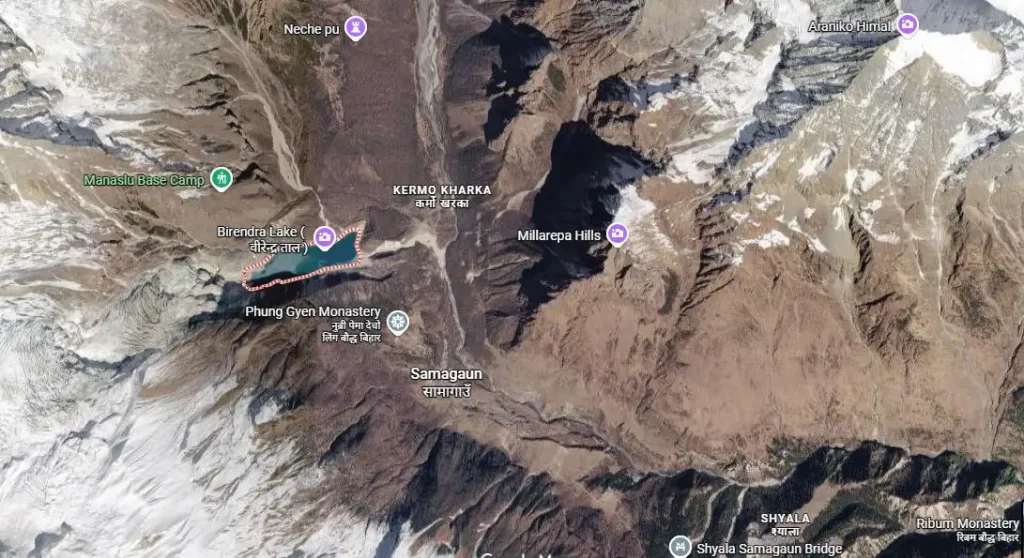
Birendra Lake sits inside the Manaslu Conservation Area, within Chumnubri Rural Municipality in Gorkha District. It’s perched just above Samagaun—the largest village on the upper Manaslu Circuit and the spot most itineraries use for acclimatization before tackling Larke La Pass.
From the village, the lake is only 2–3 km away, and most trekkers complete the round trip in 2 to 3 hours. On our 12-day Manaslu Circuit Trek itinerary, this typically falls on Day 7, timed to coincide with your acclimatization day in Samagaun—so you’re not adding extra trekking days, just making good use of the rest day.
Elevation and Altitude Considerations
At roughly 3,644 m, Birendra Lake sits only about 114 meters above Samagaun (which itself is around 3,530 m). You’ll notice minor discrepancies in elevation figures depending on the source—that’s normal in the Himalayas, where GPS readings and older survey maps don’t always agree. The 3,644 m figure comes from the information board at the lake itself, so I use that as the reference point.
Even though the elevation gain is small, don’t dismiss altitude awareness entirely. You’re already trekking at nearly 3,600 meters, and it’s worth taking the walk at an easy pace rather than rushing it.
How the Lake Was Formed
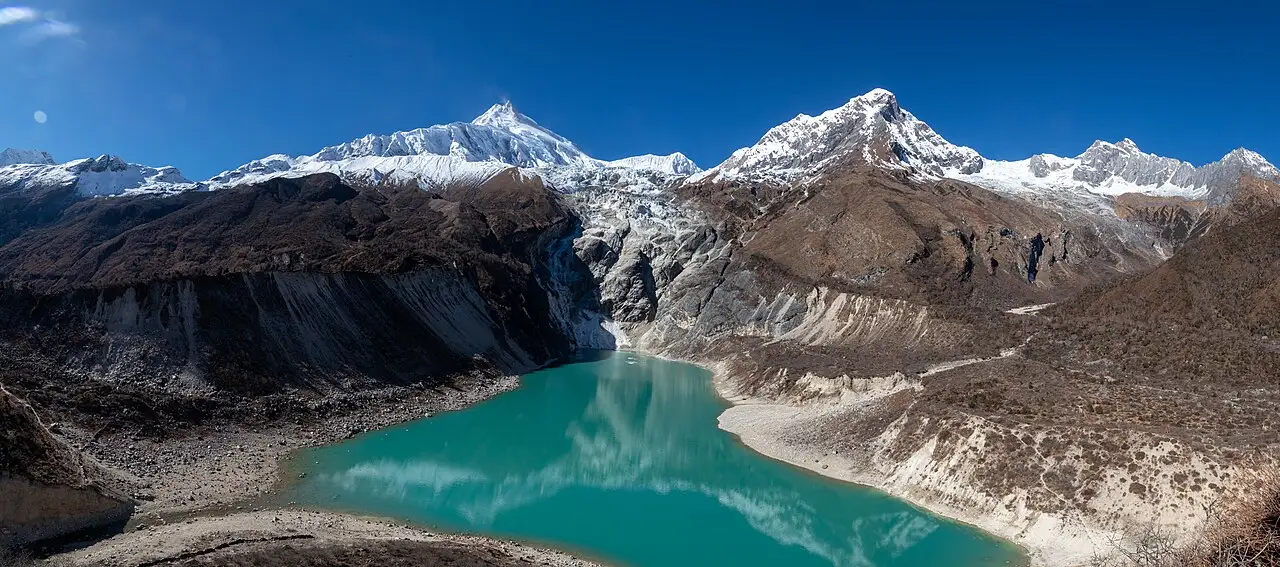
Birendra Lake is a proglacial lake, meaning it formed as the Manaslu Glacier retreated and left behind a natural moraine dam. As glaciers move, they push rock, gravel, and sediment ahead of them. When the ice melts back, that debris stays put, forming a ridge that can trap meltwater—which is exactly what happened here.
The glacier itself has since pulled back further, so it no longer touches the lake directly; there’s now a stretch of exposed bedrock and steep terrain separating the two.
Research from Poudel et al. (2025) shows just how much this lake has grown—from around 0.09 km² in 1988 to 0.22 km² in 2024. That’s a significant expansion, and it matters for more than just scenery.
The 2024 Glacial Lake Outburst Flood
On April 21, 2024, Birendra Lake experienced a sudden glacial lake outburst flood (GLOF). Water levels spiked without warning, sending a surge down into the Budhi Gandaki River. At the Ghap monitoring station, river levels jumped by 69 cm in just 20 minutes. The flood damaged a bridge along the trekking route, though thankfully no lives were lost.
Local avalanche specialists pointed to a slide of ice and debris from nearby slopes—not unusual for a mountain as avalanche-prone as Manaslu. Climate researchers have also tied the event to broader climate change trends, though most agree the moraine dam itself wasn’t structurally compromised; the seasonal meltwater surge was simply unusually forceful that day.
This is a good reminder that glacial lakes in Nepal are dynamic, changing environments—part of what makes them so striking, but also why trekking agencies and conservation authorities keep an eye on them.
Cultural and Spiritual Significance
For the Tibetan Buddhist communities of the Manaslu region, Birendra Lake isn’t just a scenic stop—it’s sacred ground. Every year during the Nepali month of Mangsir (mid-November to mid-December), locals hold a puja ceremony at the lakeshore.
Walk along the water’s edge and you’ll spot prayer flags fluttering and small stone cairns left behind by pilgrims and trekkers alike. These aren’t random piles—they’re personal markers of a journey completed, a mountain respected. Many visitors add their own stone to the pile, a small but meaningful way to take part in local tradition.
A quick note from experience: keep noise levels down and avoid disrupting the site. For many Nubri locals, this lake carries the same weight a temple or shrine might elsewhere.
While you’re in the area, it’s also worth knowing that Pungyen Gompa, a monastery above Samagaun, is part of the same spiritual landscape connected to the lake and surrounding peaks.
Need Help? / Call Us
+977-9845548583 or Chat with us on WhatsApp
Ask a Question?
What Permits Do You Need?
Birendra Lake falls inside Nepal’s restricted Manaslu region, so the permit requirements are identical to what you’d need for the Manaslu Circuit Trek up to Samagaun. There’s no separate paperwork just for the lake. You’ll need:
- Manaslu Restricted Area Permit (RAP)
- Manaslu Conservation Area Permit (MCAP)
Both of these have to be processed through a licensed trekking agency based in Kathmandu, and you can’t apply for them once you’re already on the trail—they need to be sorted before departure. At Visit View Nepal Trek, we handle this paperwork on your behalf, so you won’t have to deal with the back-and-forth yourself.
One thing worth knowing upfront: because Manaslu is a restricted area, you can’t trek here solo. A licensed guide is mandatory, and this ties directly into the permit process itself.
If you want the full picture—costs, required documents, application steps—our Manaslu permits guide breaks it all down.
Getting to Birendra Lake: The Route from Kathmandu
Even if your main goal is just seeing Birendra Lake rather than completing the full Manaslu Circuit, you’ll still need to travel through the same restricted-area villages to get there. There’s no shortcut around this.
Kathmandu to the Trailhead
Most trekkers drive from Kathmandu to Machha Khola via Arughat in Gorkha District. Expect the drive to take 7–8 hours, though this varies quite a bit depending on road conditions.
A note on current road access: The Rasuwa flood in August 2026 didn’t damage the Manaslu Circuit Trek trail itself, but it did affect some road sections leading into the region. Getting to Machha Khola may currently require an alternate route via Benighat-Arughat. Road conditions change, so confirm the latest status with your trekking agency or local authorities before you set off.
Machha Khola to Samagaun
From here on, it’s all on foot. The walk from Machha Khola to Samagaun takes roughly 6–7 days and covers about 82.5 km (51.26 miles), passing through Jagat, Deng, Namrung, and Shyala along the way.
Expect 7–8 hours of walking daily, moving through forested trail sections, crossing suspension bridges, and gradually climbing into higher, thinner air as you approach Samagaun.
Samagaun to Birendra Lake
The final stretch is short—just 1 to 1.5 hours. A signposted trail branches north from the center of Samagaun straight toward the lake. You’ll cover about 2–3 km (1.24–1.86 miles) and gain roughly 114 meters in elevation.
For a visual sense of how these locations connect, our Manaslu Circuit Trek map guide lays it out clearly.
Best Time to Visit Birendra Lake
The two prime windows are Spring (March–May) and Autumn (September–November). Both seasons bring stable weather, clearer mountain views, and manageable daytime temperatures—ideal conditions whether you’re focused on the lake itself or the multi-day trek to reach it.
- Spring: Rhododendron forests bloom lower on the trail, adding color to the journey.
- Autumn: Skies tend to be at their clearest, which makes for some of the best reflection shots of Manaslu in the lake’s still water.
Winter and monsoon treks are technically doable but come with added difficulty. Winter means snow-covered trails and colder exposure at altitude. Monsoon season brings slippery paths and a higher risk of landslides along the route. For more detail, see our guide to the best time for the Manaslu Circuit Trek.
What to Pack and How to Prepare
Gear for the Hike
The walk from Samagaun to the lake is short, but you’re still above 3,500 meters—so pack for altitude, not distance. Bring:
- A warm insulating layer
- Windproof outer clothing
- Sturdy trekking boots
- A small daypack with water and snacks
Sun exposure is stronger than you’d expect at this elevation, and glare bouncing off ice and water intensifies it further. Sunscreen and a hat are strongly recommended; sunglasses are optional in most seasons but become essential in winter, when snow glare gets intense.
It’s also worth bringing a camera or phone with plenty of storage and battery life charged up—Birendra Lake is genuinely one of the most photogenic stops on the entire Manaslu trek, especially for shots of the glacier and surrounding peaks.
For the complete gear list covering the whole trek, check our Manaslu packing list.
Pacing Yourself
This hike is typically scheduled on an acclimatization day, so there’s no reason to rush it. Walk at a steady, comfortable pace, take breaks when you need them, and let your body continue adjusting to the altitude. If you’re new to trekking at elevation, our Manaslu Circuit Trek for beginners guide covers acclimatization basics worth knowing beforehand.
Costs
There’s no standalone entry fee or special permit for Birendra Lake itself. It’s typically visited as a side trip during the Manaslu Circuit Trek, Manaslu Base Camp trek, or Manaslu Tsum Valley trek, so the cost is already folded into your general trekking expenses—permits, guide fees, transport, food, and lodging. Nothing extra to budget for specifically. Our Manaslu Circuit Trek cost guide has the full expense breakdown if you’re budgeting your trip.
Other Side Trips Worth Considering from Samagaun
Birendra Lake isn’t the only option for your rest day in Samagaun—two other routes are commonly combined with it or chosen as an alternative.
Manaslu Base Camp
At 4,800 meters (15,748 feet), Manaslu Base Camp is a tougher but highly rewarding side trip. You’ve got two approach options:
- Hike to Birendra Lake first, then continue upward toward base camp.
- Head directly for base camp, taking in views of the lake from higher elevation along the way.
Both routes end at the same destination but offer different perspectives on the mountain landscape.
The round trip from Samagaun runs about 19 km (12 miles) and takes 8 to 10 hours, though your actual time depends on pace, weather, and how long you linger at the lake. Past Birendra Lake, the trail turns steep and rocky, crossing moraine terrain as it climbs—making this a considerably more demanding hike than the lake visit alone.
Pungyen Gompa
For a different flavor of the Manaslu region, Pungyen Gompa combines spiritual heritage with some genuinely dramatic mountain scenery. Sitting at around 4,050 m (13,287 ft), this sacred Buddhist monastery looks straight out onto Manaslu and the glacial terrain surrounding it.
Just nearby, Pungyen Glacier adds to the drama—its icy slopes and rugged edges are a reminder of how raw this high-Himalayan landscape really is. The area around the monastery itself is quiet and open, and most trekkers find the short detour from Samagaun well worth the extra effort.
As a standalone side trip from Samagaun, plan for roughly 12 km (7.5 miles) round trip and 5–7 hours of walking, though this shifts depending on your pace and how long you spend at the gompa.
Good to know: Pungyen Gompa is already built into Visit View Nepal Treks’ 12-day Manaslu Circuit Trek itinerary—you’ll pass through it on the walk from Shyala to Samagaun, so there’s no need to add extra days if you’re booked on our standard route.
Birendra Lake: Small Detour, Big Payoff
You don’t need an extra day on your itinerary or much physical effort to reach Birendra Lake—that’s part of what makes it such a good stop. It’s a short, easy walk that leads to one of the most striking views on the entire Manaslu Circuit Trek.
The trail itself is gentle, the lakeshore is calm, and it’s a natural spot to rest before tackling the tougher sections still ahead on the route. Despite being modest in size, the lake carries real weight in the trekking experience—it doubles as part of your acclimatization before Larke La Pass, and it holds deep spiritual meaning for the Nubri community who call this region home.
You can treat it as a standalone side trip, continue onward toward Manaslu Base Camp, or pair it with a visit to Pungyen Gompa. However you choose to do it, give yourself a little time at the water’s edge rather than turning straight back to Samagaun.
Still working out the details of your Manaslu trip, or unsure how Birendra Lake fits into your plans? Reach out to Visit View Nepal Treks—we’re happy to help you map it out.
Final Thoughts
Birendra Lake is one of those rare spots on the Manaslu Circuit Trek where you’re not just chasing another viewpoint—you’re stepping into something locals genuinely hold dear. Pair it with your acclimatization day in Samagaun, go early for calmer water and better reflections of Manaslu, and take the extra hour to sit by the shore before heading back down.
Need Help? / Call Us
+977-9845548583 or Chat with us on WhatsApp
Ask a Question?
Frequently Asked Questions
1) Where is Birendra Lake located?
It sits in Gorkha District, Gandaki Province, inside the Manaslu Conservation Area, just above Samagaun village.
2) How do I get to Birendra Lake?
You’ll trek the Manaslu Circuit route from Machha Khola through Jagat, Deng, Namrung, and Shyala to reach Samagaun, then take a short hike up to the lake from there.
3) How long is the hike from Samagaun to Birendra Lake?
Around 1–1.5 hours one way, covering roughly 2–3 km (1.24–1.86 miles), depending on your pace.
4) What is the altitude of Birendra Lake?
Approximately 3,644 meters (11,955 ft) above sea level.
5) Can I visit Birendra Lake without doing the full Manaslu Circuit Trek?
Yes. You can trek to Samagaun, visit the lake, and return the same way—no need to cross Larkya La Pass or finish the full circuit.
6) Do I need a permit just to see Birendra Lake?
Yes—the Manaslu Restricted Area Permit and Manaslu Conservation Area Permit are both required, along with a licensed guide.
7) Can I swim in Birendra Lake?
No. The water is freezing glacial meltwater, and swimming would also go against the site’s spiritual significance to the local Nubri community.
8) What is the best time to visit Birendra Lake?
Spring (March–May) and autumn (September–November) offer the clearest views and most stable trekking conditions.
9) Why is it called Birendra Lake?
It’s named after the late King Birendra Bir Bikram Shah, who visited in 1977. Locally, it’s often called Birendra Taal.
10) Was Birendra Lake always called by that name?
No—it was originally known as Yamcho, a Tibetan word meaning “upper lake,” before being renamed in 1977.
11) Is the hike to Birendra Lake suitable for beginners and families?
Yes, the trail is short and gradual. That said, it’s best tackled once you’re already acclimatized to Samagaun’s altitude.
12) Is there an entry fee for Birendra Lake?
No separate fee—access is covered under your standard Manaslu region permits.
13) Is Birendra Lake dangerous because of the 2024 flood?
Not particularly. The flood resulted from sliding debris rather than a failure of the moraine dam, and there were no casualties.
14) How was Birendra Lake formed?
It formed as glacial meltwater from the Manaslu Glacier collected behind a natural moraine dam.
15) Can Birendra Lake be combined with other side trips from Samagaun?
Yes—it’s commonly paired with a hike to Manaslu Base Camp or a visit to Pungyen Gompa.
16) Is there a spiritual or religious ceremony held at Birendra Lake?
Yes, an annual puja and prayer ceremony takes place during the Nepali month of Mangsir (mid-November to mid-December).